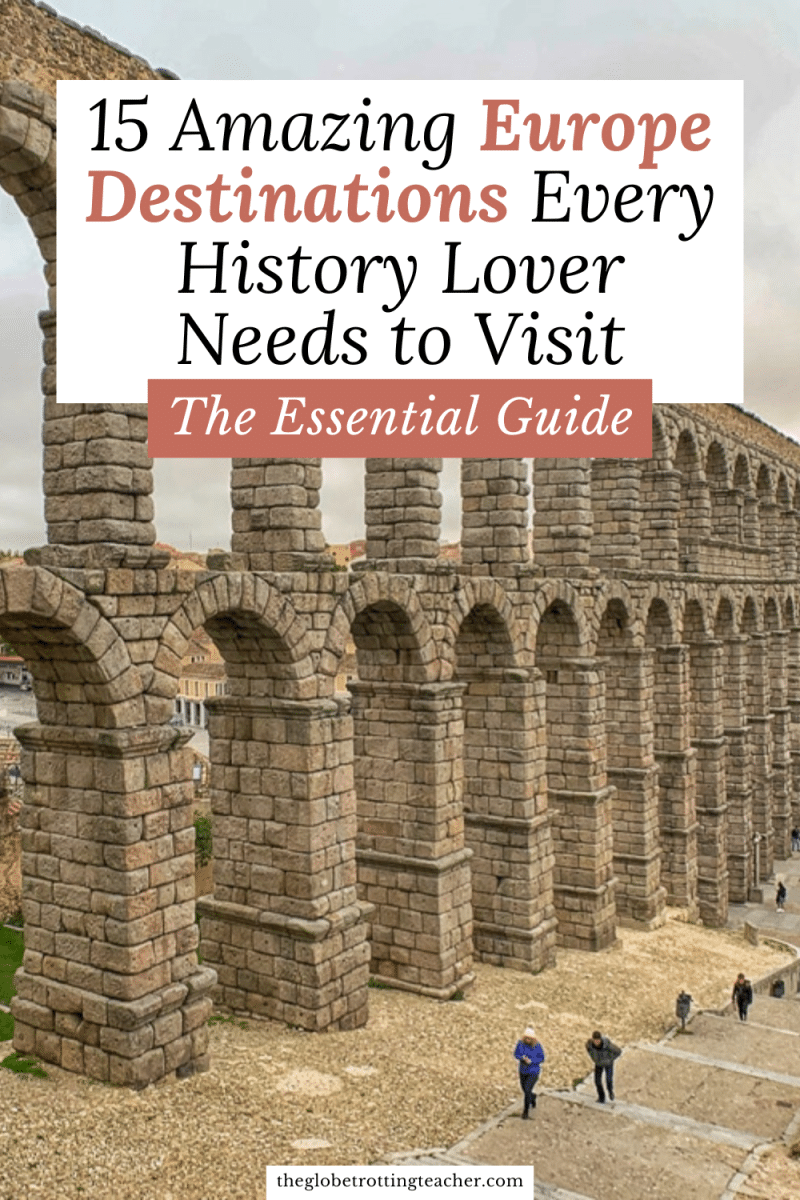


If you’re the type of traveler who stops to read every museum plaque (no shame, same here), then this list is for you.
Europe isn’t just historical. It’s FULL of history, which is one of my favorite things about Europe. You don’t just read about history here; it’s something you stand in, walk through, and see with your own eyes.
So if you or your travel partners love to visit historical places on your trips, this list is full of Europe travel inspiration for your European travel bucket list!
Ancient ruins…check! Medieval castles…check! These are 15 amazing places in Europe every history lover needs to visit!
1. Pompeii – Italy
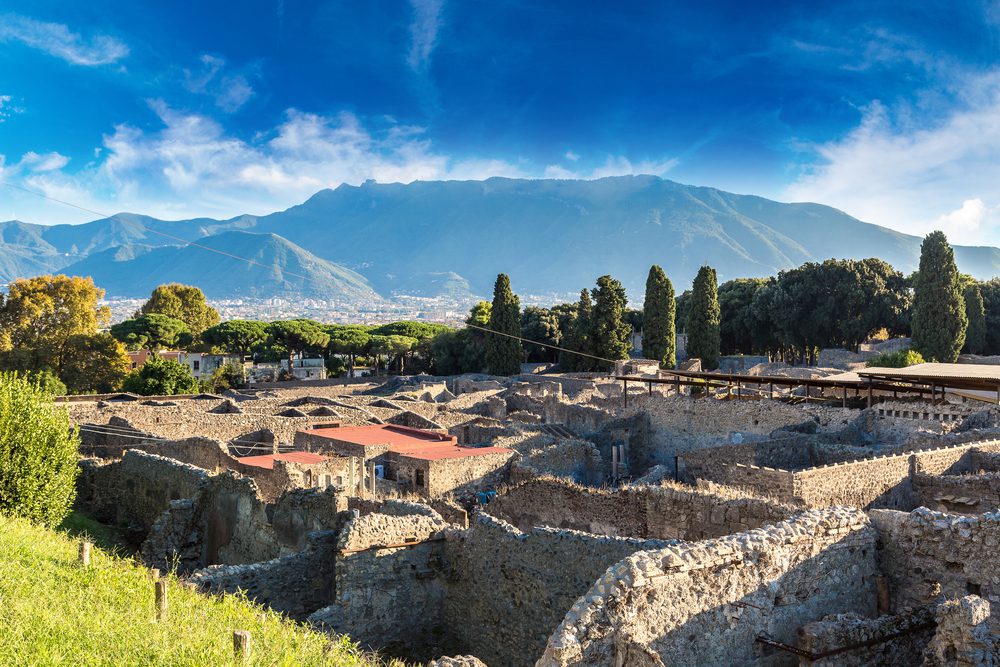
Pompeii is the most famous city frozen in time, quite literally. When Mount Vesuvius erupted in 79 AD, it buried Pompeii under layers of ash, preserving streets, homes, and even people as they were in their last moments.
The city was probably built around the 8th or 9th century B.C. and is now a UNESCO World Heritage Site. Millions of people visit this ancient Roman city every year. Walking through the vast area of ruins is as close as you’ll get to time travel.
The first time I visited, I was blown away. It’s truly one of the most incredible sights you’ll ever see.
Check out my complete Pompeii day trip guide!
2. Alhambra – Granada, Spain
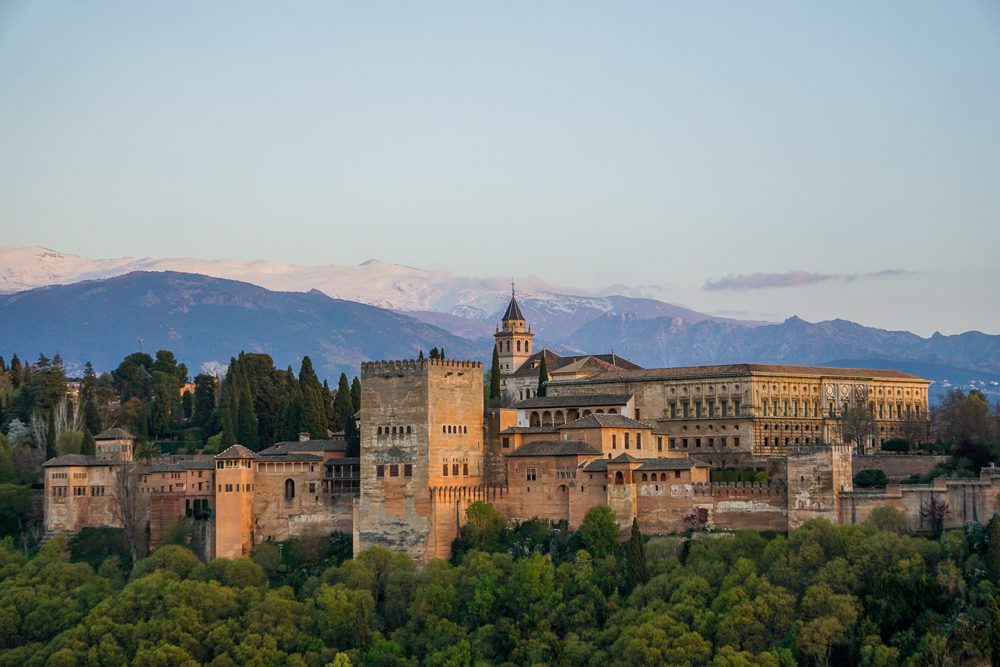
Built in the 13th and 14th centuries, this former fortress-turned-royal-palace is a masterpiece of Islamic architecture, detailed with intricate tilework, carved arches, and landscaped courtyards that highlight the history and culture of southern Spain.
Today, the Alhambra is a UNESCO World Heritage Site (since 1984) and one of the most visited places in Spain. It’s an amazing complex where you can see how Muslim and Christian cultures intertwined for centuries of Spanish history.
The Hall of Lions, the Nasrid Palaces’ reflecting pools, and the Generalife Gardens were designed for royalty, and still feel this way today. After the Catholic Monarchs took over in 1492, they added churches and military buildings, layering even more history into the mix.
Plus, the views of and from the Alhambra are incredible. You can see Granada from the Alhambra site, and on the hill opposite the Alhambra, you get gorgeous sunset views with the Alhambra and the Sierra Nevada Mountains in the background.
If you have time for just one stop in Granada, this is it.
Click here for my complete Alhambra guide!
3. Colosseum & Roman Forum – Rome, Italy

No list of historical sights in Europe is complete without Rome’s Colosseum (a.k.a. the Flavian Amphitheater). It was built in 72 A.D. and was where gladiators battled for glory and entertainment.
Try to imagine 50,000 spectators inside the Colosseum for gladiator battles. It must have been an incredible thing to see!
The nearby Forum was ancient Rome’s political and social hub. Now, it’s one of those places where you’re truly walking in the footsteps of incredible history. Today (thankfully), you don’t have to worry about upsetting an Emperor. But you do have to manage the many visitors who visit each year.
Both sites are part of the UNESCO World Heritage Site and tell stories of what life was like in the Roman Empire nearly 2,000 years ago.
Read more about Rome’s attractions in my 3 days in Rome guide.
4. Stonehenge – Southern England
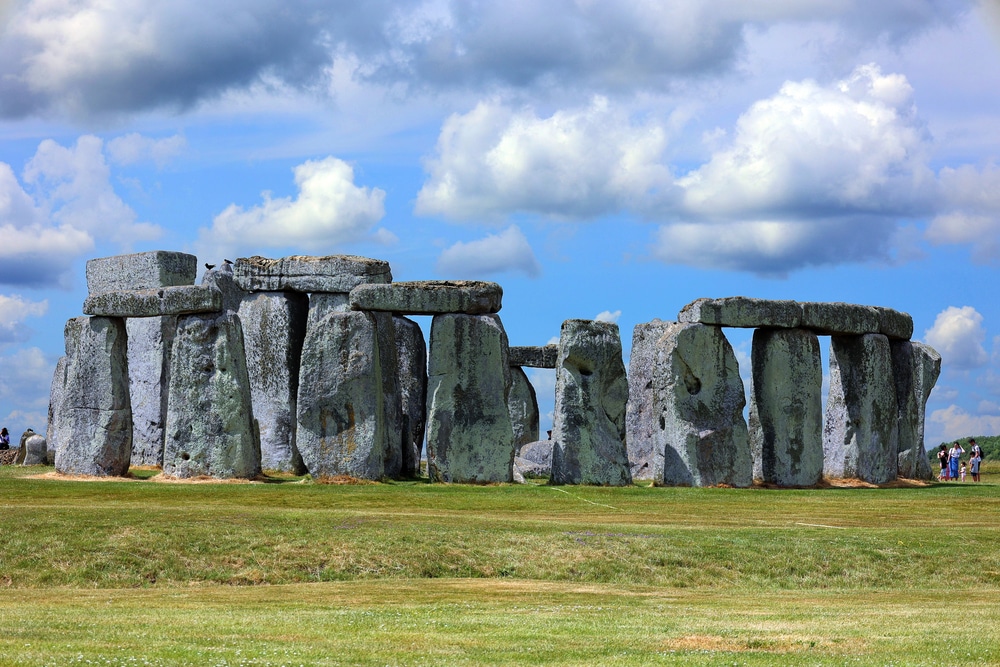
Stonehenge is a prehistoric monument that has puzzled historians for centuries. Was it a burial ground? A giant calendar? A place of religious importance? No one knows for sure, but I can tell you that standing among these massive stones is both eerie and impressive.
The earliest stones of Stonehenge were placed around 3000 B.C., with construction continuing until about 1600 B.C. I can’t believe how wild and absolutely mindblowing this is when you consider the stones (weighing tons and tons!) might have come from miles away, without cranes, trucks, or modern tools.
This UNESCO World Heritage Site and must-see is now an easy day trip from London, and perfect for history lovers who are fascinated by the unknown.
Click here to plan your London Trip with a day trip to Stonehenge.
5. Palace of Versailles – Paris Day Trip
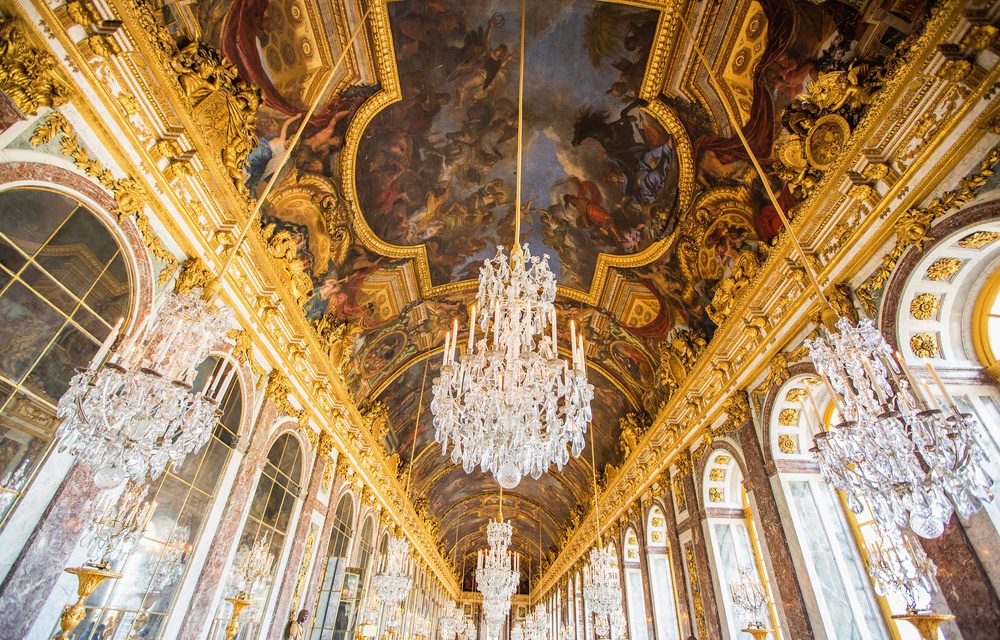
Louis XIV didn’t believe in subtlety, and Versailles is the extravagant proof! Between the Hall of Mirrors, over-the-top chandeliers, and gardens that stretch for miles, Versailles is the ultimate symbol of power, wealth, and opulence.
The history that surrounds the palace is incredible, and it’s hard not to imagine the luxurious lifestyle that King Louis XIV enjoyed while living here. It’s also easy to see why the French people finally got fed up with Louis XIV’s successors (who continued this powerful and lavish lifestyle) and started the French Revolution.
The Palace at Versailles has been a UNESCO site since 1979. It’s an easy day trip from Paris if you want a glimpse of what “extra” looked like in the 1600s. It’s absolutely stunning!
Click here to plan your Paris trip with a day trip to Versailles.
6. The Acropolis – Athens, Greece
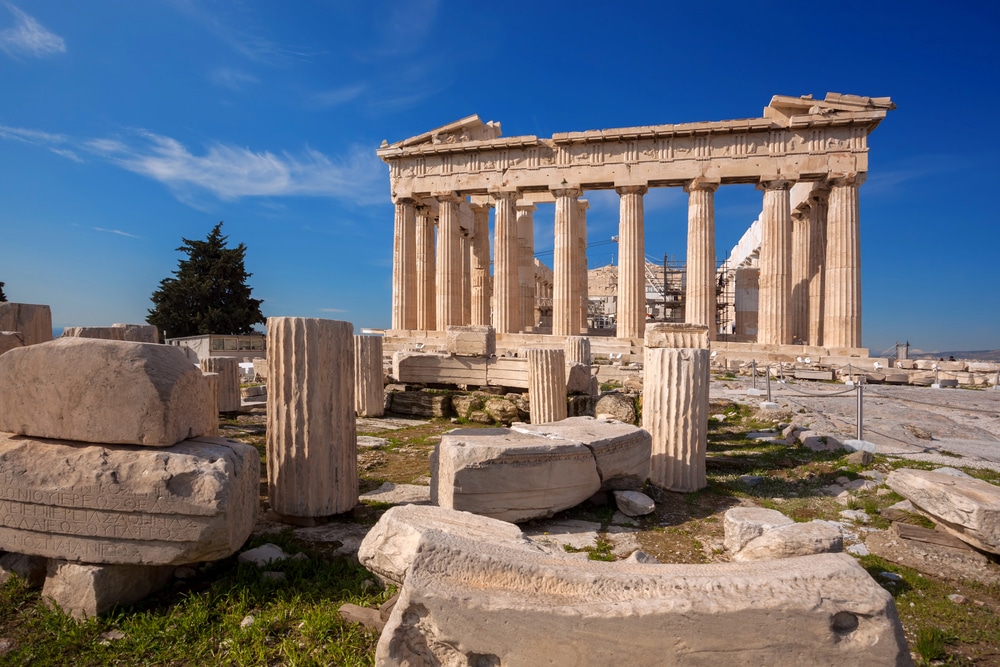
Towering over Athens, the Acropolis is home to the Parthenon and a collection of iconic ruins that helped shape Western civilization.
Known as the “high city” in Greek, the Acropolis has seen it all, from kings to philosophers and worshippers to now a steady stream of visitors fascinated by the significance of this area. Since the Bronze Age (3,000+ years ago if you’re counting), the Acropolis was the center of politics, culture, and religion in ancient Athens, as well as a strategic defensive location.
If you love history as much as I do, you could easily spend a few hours visiting its 30+ landmarks, from temples like the famous Parthenon to ancient theaters, monuments, and fortifed gates.
The Acropolis is one of Europe’s most famous historical spots and one of the most visited UNESCO World Heritage Sites in the world. It’s a must-visit, even if scaffolding is always part of the scenery to maintain its structure.
Good to Know: It’s a bit of a climb and can be really hot in the summer. I’d recommend visiting in spring, fall, or even winter, to avoid the searing heat.
Plan Your Visit to the Acropolis in Greece!
7. Newgrange – Northeast Ireland
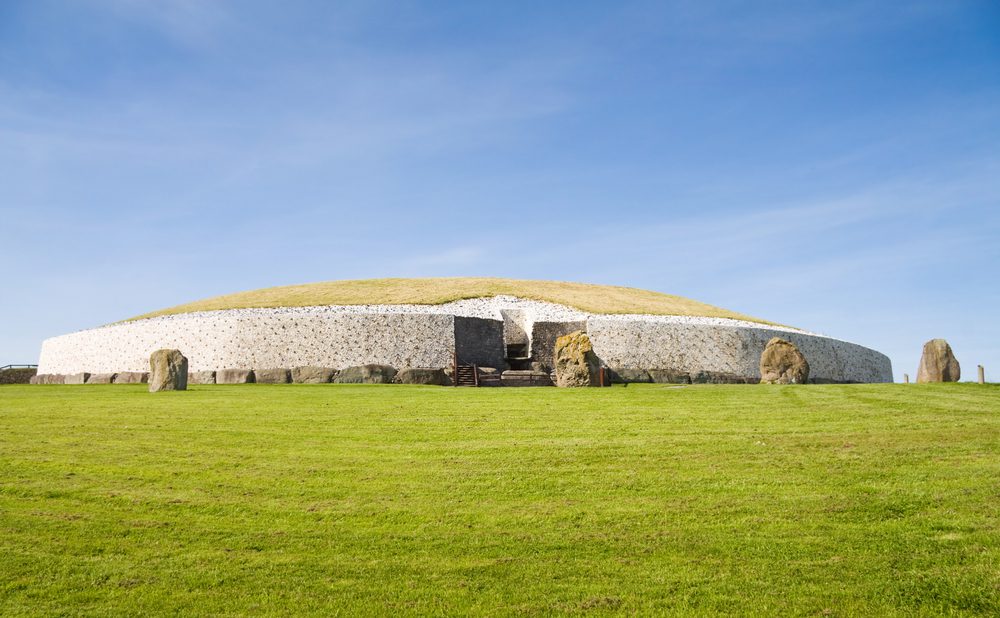
Newgrange is a stone-age tomb and a UNESCO World Heritage Site about 30 minutes north of Dublin Airport in Ireland. It’s more than 5,000 years old, which makes it older than places like Stonehenge and some of the Egyptian pyramids. It also might be a place that you haven’t heard that much about compared to other places on this list.
Newgrange has a passageway that was designed so that on the first day of winter, sunlight floods the chamber in a perfect alignment. It’s facts like these that leave me dumbfounded. I can’t get over them. It’s incredible to me that these ancient people could take such precise measurements and build something that has lasted for thousands of years all without modern tools.
It’s a UNESCO site and one of the best prehistoric sites in Europe.
Heads up: The massive tomb can only be toured with a guide, so it’s best to book your tickets well in advance of your Ireland trip.
Read more in my 10-day Ireland road trip itinerary!
8. Sagrada Familia – Barcelona, Spain
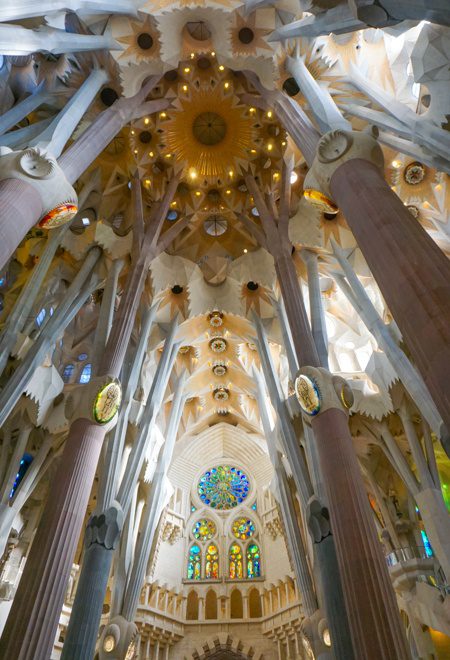
Construction on Gaudí’s intricately detailed, twisting basilica started in 1882 and (fun fact) it’s still not finished. It’s set to be completed by 2026 to commemorate the 100th anniversary of Gaudi’s death. I guarantee it’ll be one of the most unique churches and UNESCO sites you’ll ever see.
Inside, it feels like stepping into a stone forest, with stained glass that throws rainbow light in every direction. Every element symbolizes something.
Gaudí’s masterpiece is part church, part sculpture, and 100% unique. It has a mix of Late Spanish Gothic, Catalan Modernism, and Art Nouveau architecture that makes Sagrada Familia unlike any other basilica in the world.
And even if you’re not into churches, this one is worth the visit just to see what architectural ambition and genius artistry look like.
Find out more about the Sagrada Familia in my Barcelona guide!
9. Belem Tower – Lisbon, Portugal
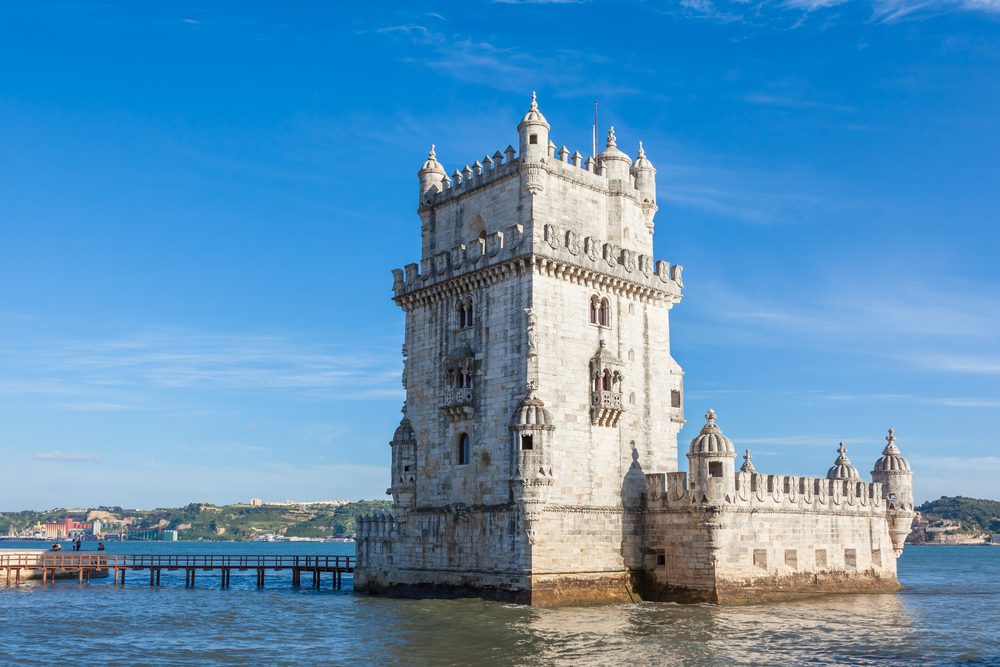
Built in 1514, Belém Tower (a.k.a. Tower of Saint Vincent) once stood guard over Lisbon’s harbor during Portugal’s Age of Exploration. It was the place where famous explorers like Vasco da Gama and Pedro Alvares set off on their journeys.
Today, this UNESCO-listed fortress is more about the views than its defensive history. Climb up (93 steps, if you’re counting) for a panoramic view of the Tagus River. The very top is closed off, but there are plenty of rooms to explore in this beautiful maritime monument that tell the stories of famous Portuguese explorers.
It’s a can’t-miss sight for history lovers while visiting Lisbon.
Plan your visit using my Portugal itinerary!
10. Mont Saint-Michel – France
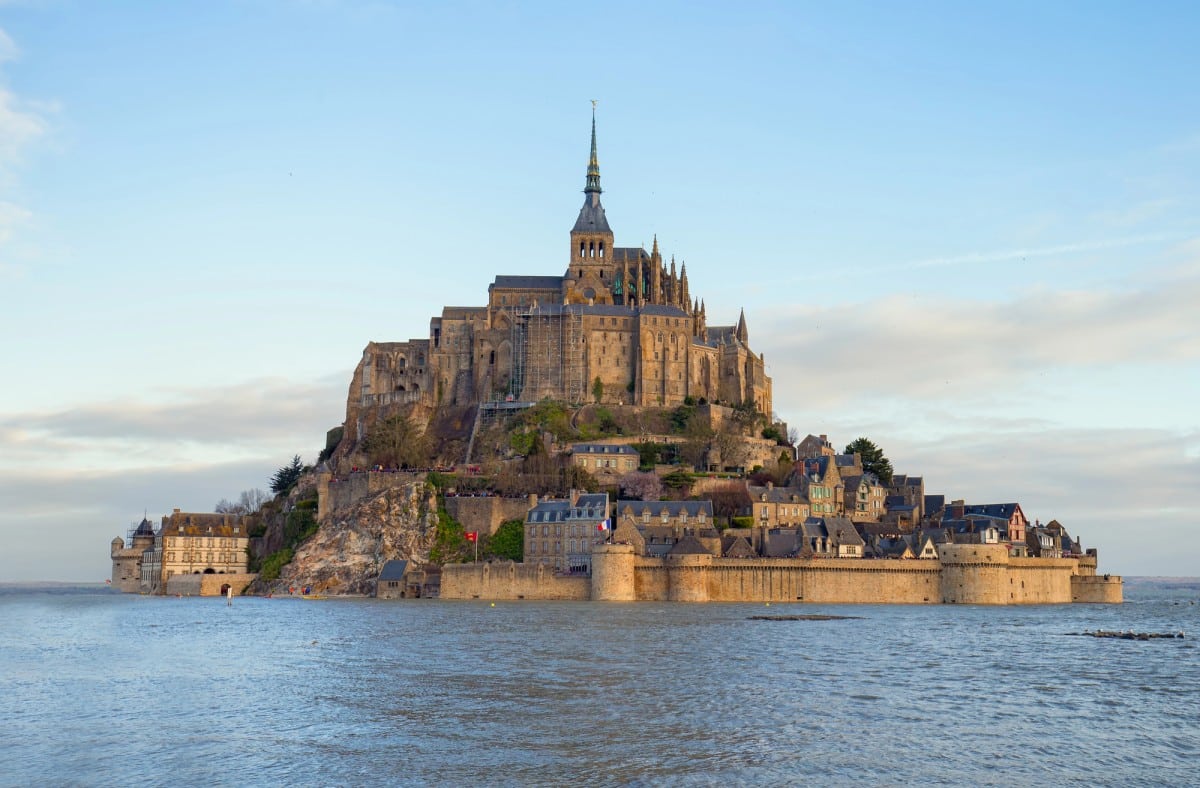
Mont Saint-Michel is a breathtaking island and monastery rising from the North Atlantic, just off Normandy’s coast. This slab of granite rock, completely surrounded by water at high tide and accessible on foot at low tide, is home to an awe-inspiring medieval monastery.
Legend has it that in 708, the Archangel Michael appeared to St. Aubert, telling him to build a sanctuary here. Over the centuries, it evolved into a Benedictine abbey, pilgrimage destination, and medieval village. It’s also one of the most spectacular UNESCO World Heritage Sites I’ve ever seen.
Visiting Mont Saint-Michel is a total trip back in time. Once on the island, you’ll spiral through the village below the abbey and climb uphill to the top of the mount. Imagine cobblestone streets and fortifed walls overlooking the unpredictable ocean.
Today, the houses and businesses serve the many people who visit Mont-Saint-Michel, but it’s not hard to imagine what life in the Middle Ages must have looked like here!
Inside the Abbey, I loved the peace and beauty of the cloisters and the incredible views overlooking the bay!
Click here to learn more about Mont Saint-Michel.
11. Auschwitz-Birkenau Memorial and Museum – Krakow, Poland
The Auschwitz-Birkenau Memorial and Museum is not an easy place to visit, but it’s important nonetheless. This former Nazi concentration camp was built in 1940 and became a UNESCO site in 1979 as a memorial and reminder of the Holocaust.
Walking through its preserved barracks, gas chambers, and exhibitions is a chilling experience through World War II history that teaches and gives a perspective that no textbook ever could. It’s a visit that sticks with you forever and a lesson never to be forgotten.
*Out of respect, I purposely didn’t take any photos here.
Plan your visit to the Auschwitz-Birkenau Memorial and Museum from Krakow.
12. Prague Castle
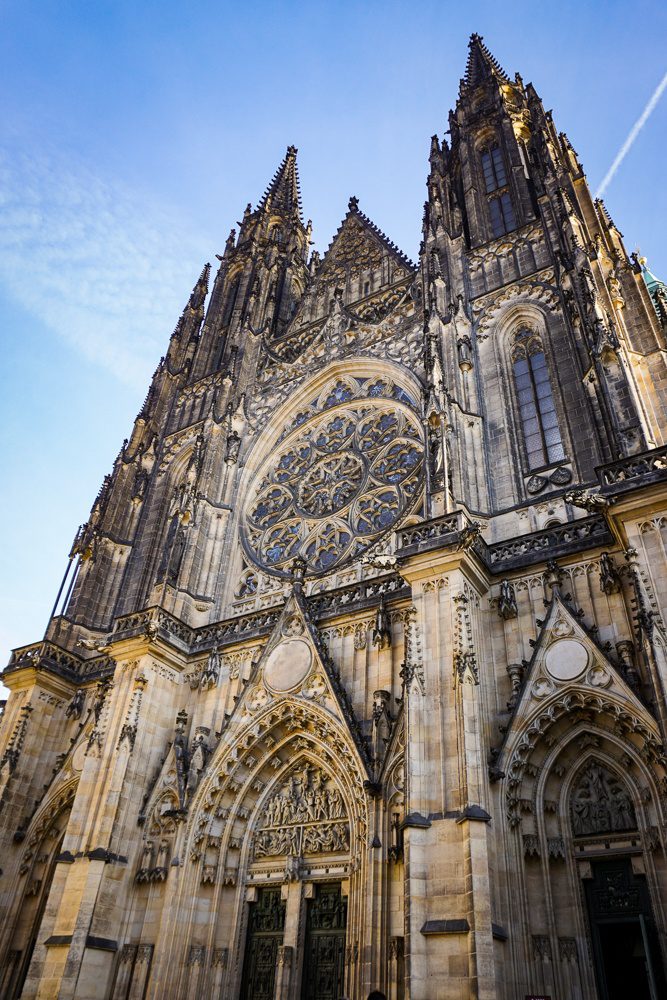
Prague Castle isn’t just a castle. It’s the largest ancient castle complex in the world, that spans a jaw-dropping 750,000 square feet. Since the 9th century, it’s been home to Bohemian kings, Holy Roman emperors, and now, the Czech president.
The castle complex is a mix of architectural styles from Gothic, Romanesque, and Baroque and includes must-see sights like the Old Royal Palace, St. Vitus Cathedral, St. George’s Basilica, Golden Lane, beautiful gardens, and hidden gems like the Lobkowicz Palace.
It’s no surprise this UNESCO-listed landmark is one of Prague’s top sights, and honestly, it’s worth the visit just for the views alone over gorgeous Prague.
Pro Tip: Climb the Old Town Bridge Tower at the edge of the Charles Bridge just before dusk to get amazing views of the Prague Castle up on the hill as the lights switch on.
Check out my Prague first-timers guide to read more!
13. Anne Frank House – Amsterdam
Visiting the small, hidden rooms where Anne Frank wrote her famous diary is sad and surreal. This required school reading came to life for me as I walked through the house. You can’t help but feel the haunting weight of her story in every corner. And seeing her actual diary in person, which is on display at the museum, has stuck with me long past my visit.
This isn’t a typical museum experience. The audio tour guides you through an almost silent, reflective experience. It feels more like stepping into a moment from the past rather than just learning about it.
The Anne Frank House gives a deeply personal and tragic glimpse into the life of one girl and her family during World War II.
Plan your visit to the Anne Frank House Museum.
14. Aqueduct & Castle of Segovia – Day trip from Madrid, Spain
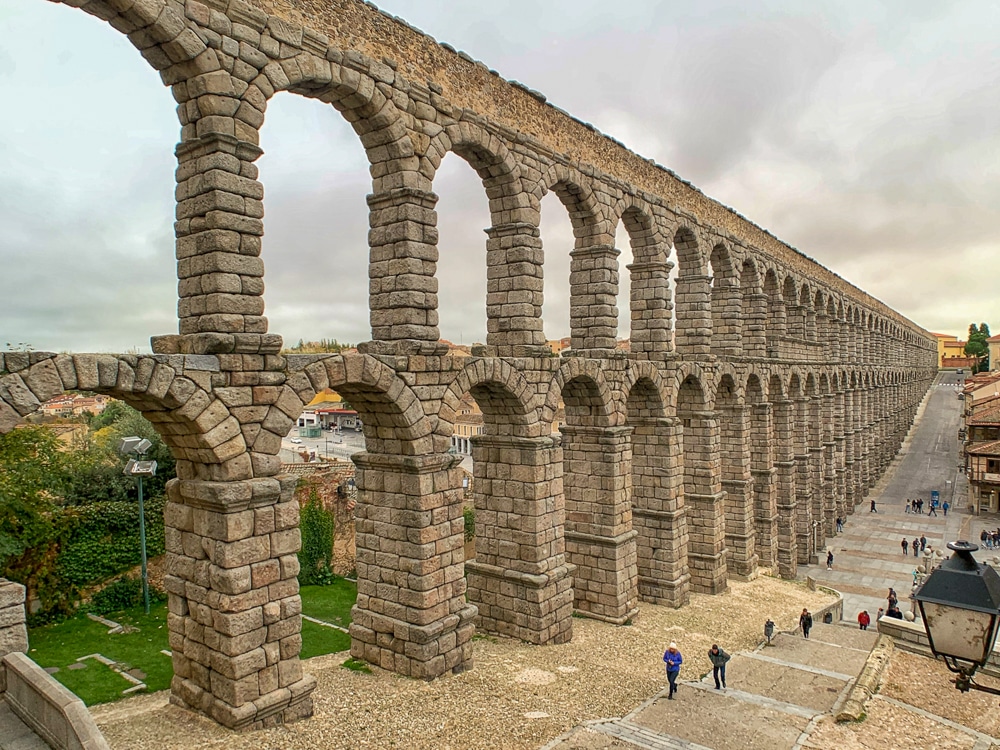
Segovia’s Roman Aqueduct has been standing strong for nearly 2,000 years without a single drop of mortar holding it together. Let that settle for a moment!
The Aqueduct is “just” perfectly cut stones and expert engineering. Altogether, it’s one of the best-preserved Roman aqueducts in the world. As I stood staring at it, I couldn’t make sense of how this incredible monument has stood the test of time with nothing to hold it in place except the power of physics. I still can’t comprehend it.
And then there’s the Castle of Segovia (a.k.a. Alcazar de Segovia). It’s a castle straight out of a fairy tale that was built around the late 11th century. It may have even inspired Walt Disney’s Cinderella Castle. When you’re there, see if you think this is the case.
Regardless, its pointed turrets and rounded towers are exactly what you picture when you think of a beautiful castle.
Both the Aqueduct and Castle of Segovia are part of the Old Town of Segovia, a UNESCO World Heritage Site, so definitely a must-visit for history lovers.
Check out this guide to learn more about this Segovia day trip!
15. Mosaics of Ravenna – Emilia Romagna, Italy
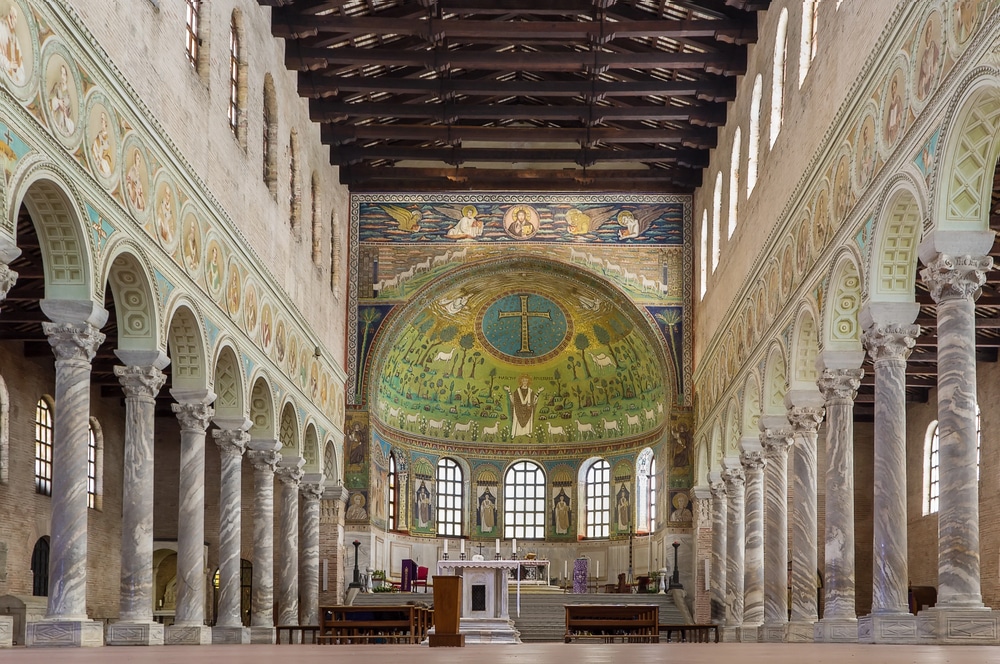
Ravenna is where history and art lovers are both equally amazed!
This city is basically a Byzantine time capsule full of stunning mosaics going as far back as the 5th century. And to be clear, these mosaics aren’t just any mosaics.
Ravenna is home to eight(!) UNESCO World Heritage Sites, with some of the most spectacular early-Christian mosaics in the world.
Be sure to visit Basilica di San Vitale, the Mausoleum of Galla Placidia, and Basilica di Sant’Apollinare Nuovo. Each one is a masterpiece, with mosaics so intricate they’ll make you wonder how anyone had the patience to put them together.
Ravenna’s monuments will leave you speechless whether you’re a history buff, an art lover, or just someone who appreciates beautiful things.
Check out my Emilia-Romagna guide to read more about Ravenna!
Which Historic Sites Have You Added to Your European Bucket List?
I hope you’re feeling inspired to pack your bags and walk firsthand in the footsteps of history throughout Europe. Let me know which ones you’d like to visit!
Like this post? Please share it on social media using the share buttons.