
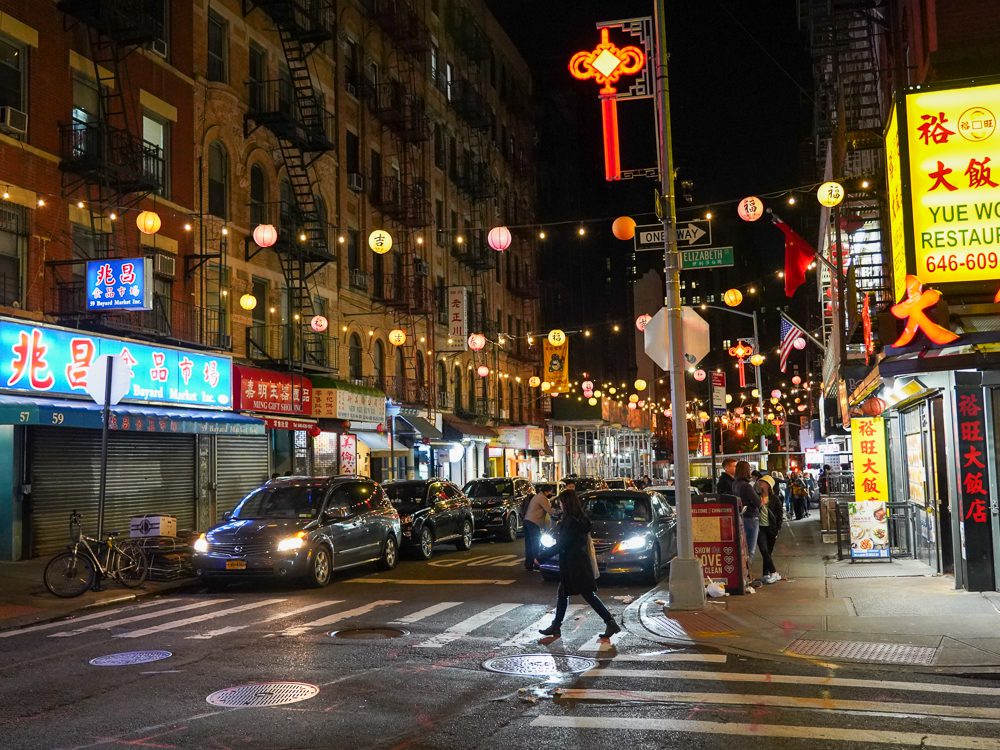


If you’re planning things to do in Chinatown NYC, you’re in the right place.
Chinatown Manhattan (not to be confused with other areas of the city like the Chinatown in Flushing Queens) is part of the city that overflows with history, cultural character, and of course, a lot of mouth-watering food.
To put together this guide, I’ve used my 20+ years of living in New York City. During that time, I’ve shopped, eaten, and strolled through Chinatown more times than I can count. It’s such a fascinating area that I’ve even done a few staycations there just so I could take more time to experience the neighborhood.
I hope you’ll use this guide not just as your what to do in Chinatown NYC checklist, but also as a way to learn why it’s such a fascinating spot in the Big Apple.
Ready to explore New York City’s Chinatown? Let’s go!
- A local’s guide to the best things to do in Manhattan’s Chinatown covering iconic places to eat, cultural landmarks, hidden gems, and cultural experiences.
- Perfect for first-time or repeat NYC visitors looking for a compact, authentic Chinatown itinerary.
- Combines food stops (like Nom Wah Tea Parlor, Fried Dumpling, Mei Lai Wah Bakery) with cultural spots (Columbus Park, Museum of Chinese in America, Mahayana Temple) and unique finds (Crown Rooftop Bar, Mmuseumm).
- Expect to spend a few hours in Chinatown to do it justice, especially for time between food tastings.
- This is a well-rounded Chinatown guide beyond the usual tourist spots.
What You’ll Miss if You Only Read this Summary
- Local tips on markets (e.g. Mott Street) and unique foods to taste.
- A favorite restaurant among locals who come to Chinatown for a meal.
- A glimpse into Chinatown’s community life.
- Some of Chinatown’s best photo spots.
Drafted by AI. Rewritten & edited by a human.
20 Best Things to Do in Chinatown NYC
On the list below, you’ll find everything from the best places to eat in Chinatown NYC, museums, historic streets, and iconic spots not to miss as you spend time in Chinatown on your very own self-guided tour!
1. Mott Street
Mott Street is the heart of Chinatown. It’s stacked with Chinese restaurants and shops seemingly connected with lantern lighting overhead (like several other streets in Chinatown) that comes to life once the sky is dark.
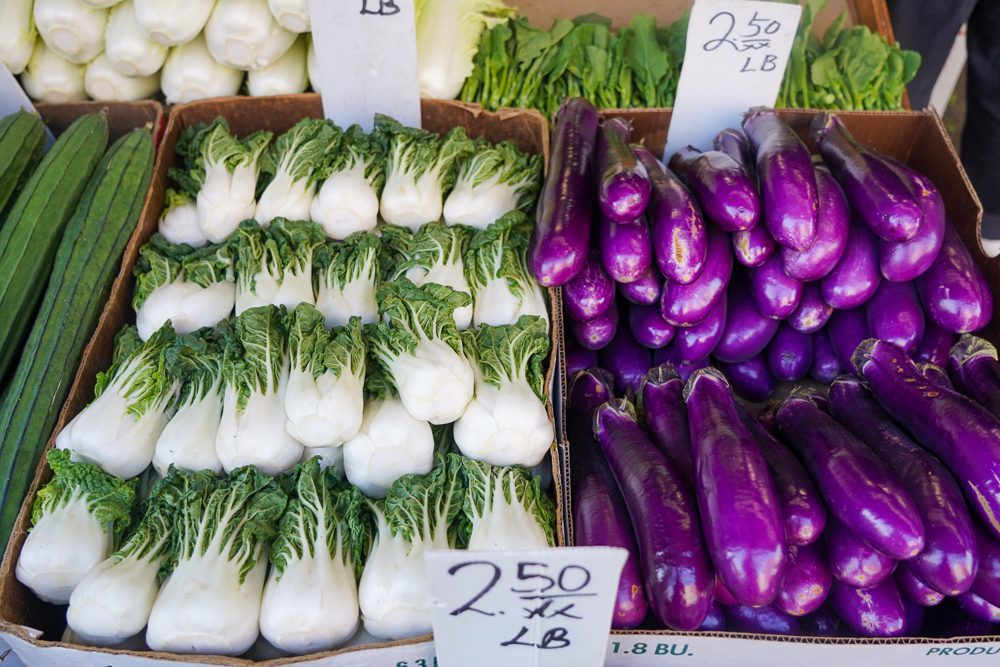
During the day, Mott Street is a hive of activity. Residents shop at the local markets for fish, fruits, and veggies. The baby bok-choy and eggplants are among the best you’ll find in the city. I’ve come to Chinatown just to get some to use for my dinner recipes.
If you haven’t tried the fruit “rambutan,” I highly recommend it! It’s small-ish and round with a red/pink spiky exterior. (It’s not dragon fruit.) Just break the shell open with your fingers and eat the white fruit inside, watching out for a small pit.
Also, as you walk along Mott Street, stop to admire the Church of Transfiguration. This historic stone church dates back to 1801.
It’s also a New York City Landmark that has survived fire, near abandonment, neighborhood gang violence in the late 1800s and early 1900s, and waves of newcomers from Irish to Italian to Chinese immigrants living in the surrounding tenement buildings.
2. Nom Wah Tea Parlor
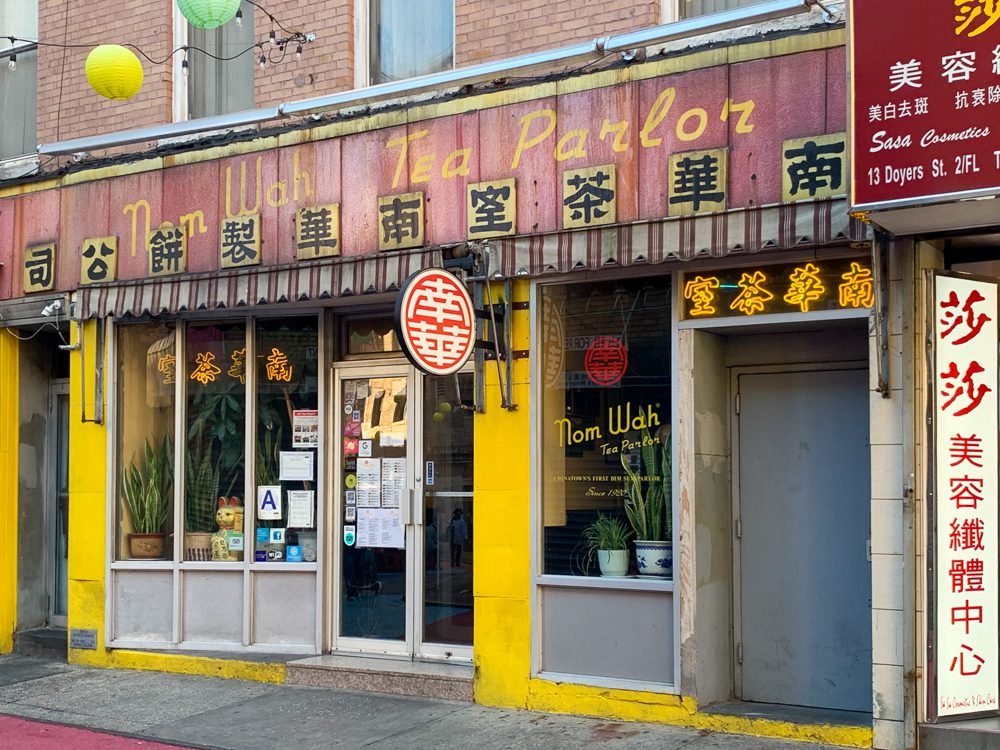
Serving up classic dim sum dishes for over 100 years, Nom Wah Tea Parlor is a historic icon in New York City’s Chinatown.
It’s located on Doyer’s Street where you’ll often see a line of people waiting to get seated in one of the classic red booths. They do take some reservations for parties of 3-5 people so it’s worth a try to avoid the line.
As you’d imagine, between 12 p.m.-2 p.m. and 6 p.m.-8 p.m. are the busiest times.
While it may not be the best dim sum in Chinatown NYC, Nom Wah’s dim sum dishes are certainly delicious. Go for the scallion pancakes, shrimp rolls, pork buns, and their classic egg rolls. You can’t say you’ve experienced Chinatown in NYC until you’ve visited Nom Wah.
ProTip: While Nom Wah Tea Parlor has earned its place in Chinatown history, but for Michelin-Star-rated dim sum, head to Dim Sum Go Go on East Broadway near the Kimlau Memorial Arch. The Cantonese-style dumplings, soups, rice rolls, and siu mai are the dishes to try!
3. Fried Dumpling
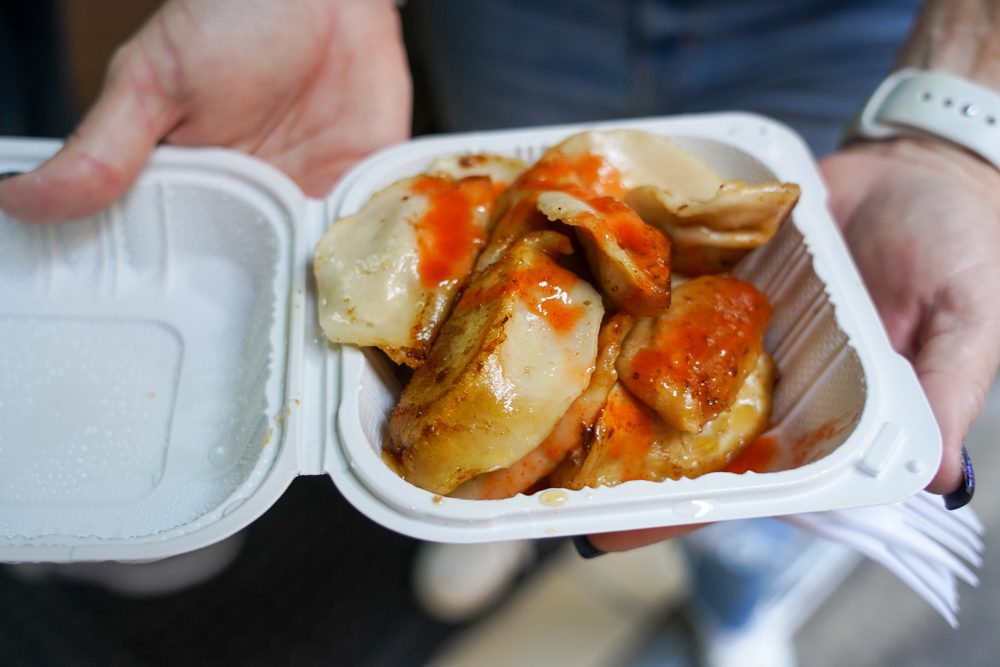
Located on tiny Mosco Street, Fried Dumpling’s unassuming storefront is easy to miss. But that would be a shame because it’s known for having some of the best dumplings in Chinatown. It’s also one of the most delicious and cheapest bites you’ll find anywhere in New York City.
For just over $1.25 (cash only), you’ll get a made-to-order paper dish with 5 crispy dumplings. Dip them in the special soy sauce for a perfect snack at any point when you’re in the mood to nosh! (NYC slang meaning to snack on something.)
Take your dumplings and, if you can resist for just a moment, head to Columbus Park at the end of the street.
4. Columbus Park
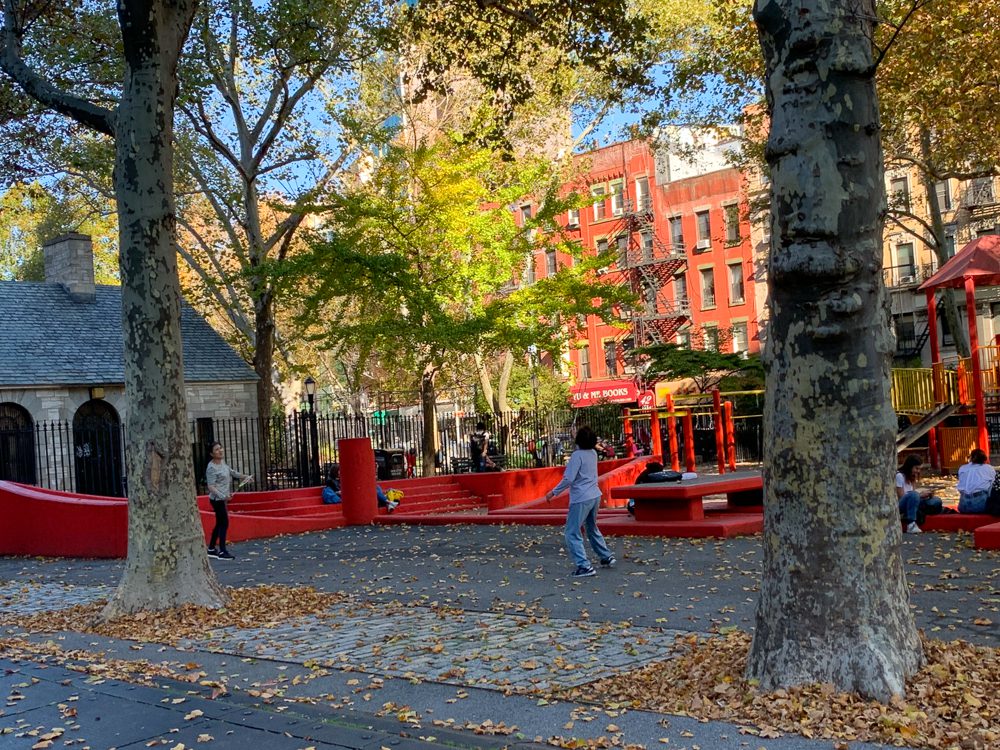
When you visit a park in New York City, you get the opportunity to glimpse the daily life of the New Yorkers who live in that neighborhood. With few private outdoor spaces, public parks are the backyards of NYC.
Columbus Park is no different. Part outdoor activity space and part community gathering spot, it’s a window into Chinatown. On any given day, you’ll find kids playing basketball, tai chi classes in session, groups of people gathering to play mahjong, and musicians playing their jinghu (a bowed stringed instrument) on the park’s benches.
The rectangular-ish shaped park is located between Baxter and Mulberry Streets and Worth and Bayard Streets just steps from Fried Dumpling on Mosco Street.
Aside from being a perfect spot to sit and eat your dumplings, the park is a way to escape the stereotypical fake designer shopping on Canal Street and see a more authentic side of Chinatown.
5. The Original Chinatown Ice Cream Factory
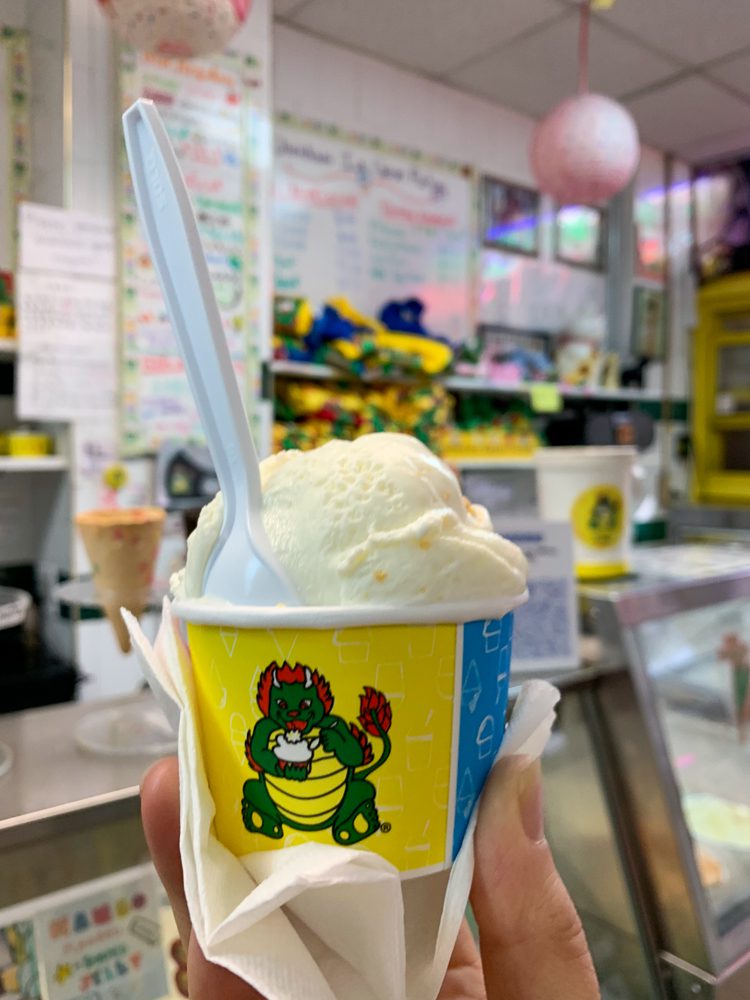
You might be wondering, ice cream? I can get ice cream anywhere! Except here the local flavors are ones that are unique to Chinatown and the exotic flavors are chocolate and vanilla!
My recommendation is to stay away from the exotic flavors and go with the Chinatown local flavors. My favorite flavor is don tot with its creamy egg custard taste, but people line up outside this Bayard Street storefront to get cones or cups of lychee, almond cookie, red bean, and black sesame ice cream!
And if you’re not sure which one to get, ask for a taste. They’ll happily give you a small spoonful to sample.
6. Mei Lai Wah Bakery
Just across the street from the Chinatown Ice Cream Factory on Bayard Street, don’t be surprised if you see a line of people waiting to order at Mei Lai Wah Bakery.
Of all the bakeries in Chinatown, it’s the most popular spot for pork buns and pineapple pork buns. Along with the dumplings on Mosco Street, these pork buns are one of the cheapest treats you’ll find in all of NYC!
Don’t be put off by the line. It moves quickly. There’s a counter to order where it’s cash only, but also kiosks where you can order and pay with a credit card.
The bakery is only open until 7:30 p.m. but it’s better to go earlier in the day anyway for fear the famed pork buns sell out!
7. Crown Rooftop Bar
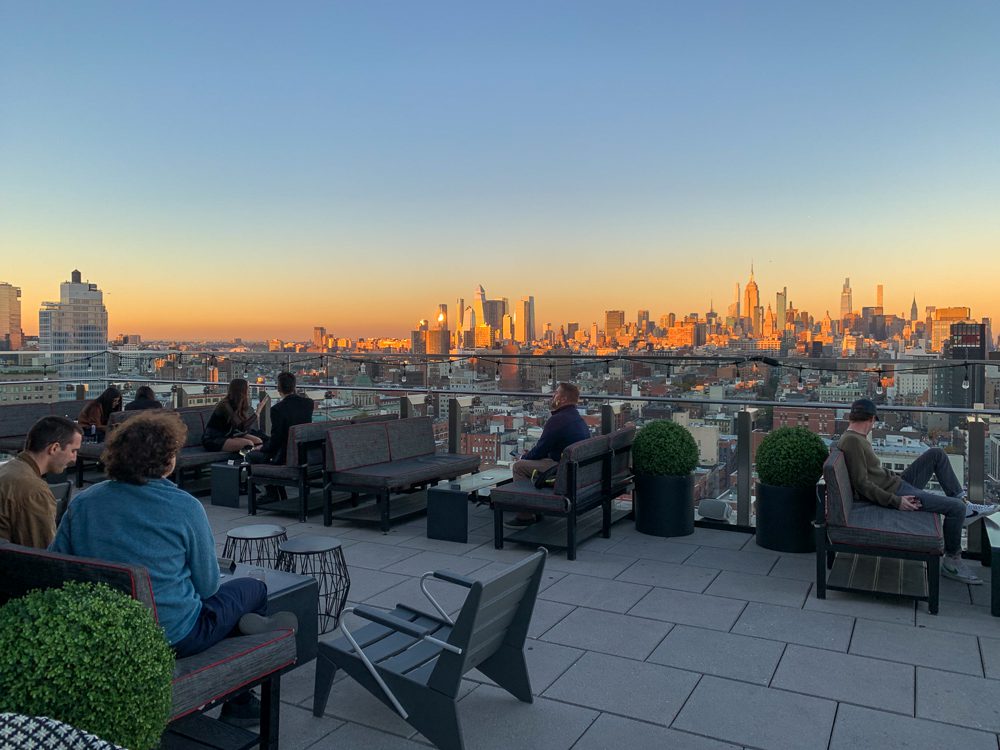
Located on top of the Hotel 50 Bowery Hotel, the Crown Rooftop Bar has one of the best rooftop views of Manhattan. From its position on the 21st floor, you can see the Empire State Building and midtown skyscrapers to the north and One World Trade Center in the southwestern panorama.
What makes the views extra special here, though? You can see east to west from the Hudson River to a stunning view of the Manhattan Bridge arch and Colonnade.
If you’re there for dusk, you’ll get the added effect of the red brake lights from the traffic pulsing across Canal Street.
The Crown opens at 5 p.m. during the week, and earlier in the afternoon on weekends. If you’re in NYC on a family trip, kids can get up to the indoor or outdoor terrace with a 21+ adult before 9 p.m.
The Crown does serve small bites in addition to drinks.
8. Manhattan Bridge Arch & Colonnade
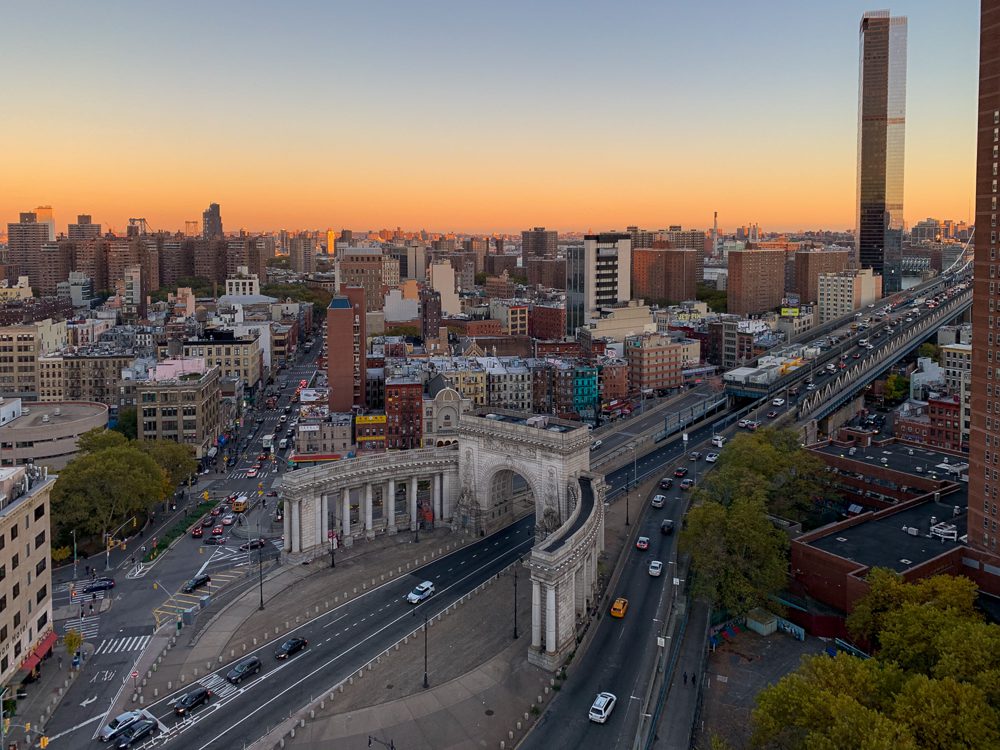
At the intersection of Canal Street and the Bowery, you might be a bit taken aback to find such a grand piece of architecture. Built in 1915, the arch and colonnade are the entryway to the Manhattan Bridge.
The Beaux-Arts arch and the columns on either side form a curving oval-like shape and include ornamental elements that include stone carvings, animals, and classical sculptures.
While the Brooklyn Bridge may be New York’s most famous bridge (and my personal fave), the Manhattan Bridge and its entryway shouldn’t be missed on a trip to Chinatown!
If you have some time to spare, walk up onto the pedestrian walkway on the right side of the bridge. There are various points for taking photos of the NYC skyline including the “hole-in-the-fence” shot which looks back over Chinatown and has One World Trade Center in the distance.
If you decide to make the complete walk, you’ll end up walking just over a mile and getting to the trendy DUMBO neighborhood of Brooklyn, not far from the Brooklyn side of the Brooklyn Bridge.
9. Mahayana Buddhist Temple
This is the biggest Buddhist Temple in New York City with the biggest golden Buddha statue in the city, as well.
It’s located just across from the Manhattan Bridge arched entryway and the Crown Rooftop so it’s easy to check a few things off your Chinatown list all within a single block.
Remember, this is a house of worship. The Temple asks that visitors be dressed modestly to enter.
10. Wo Hop
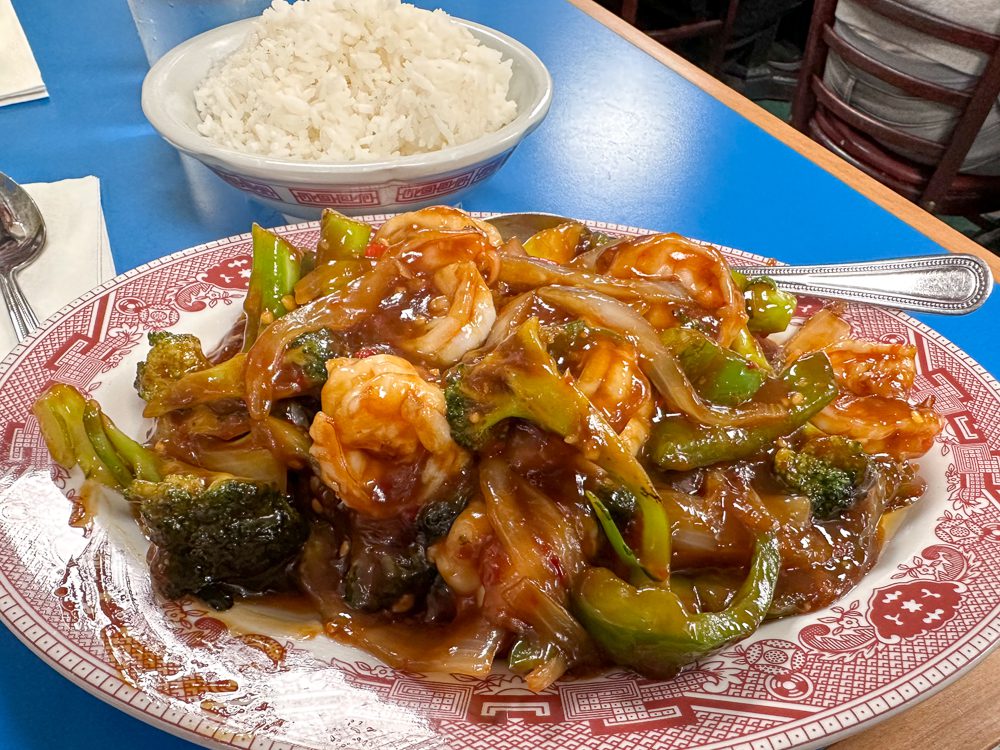
In New York City’s Chinatown, finding delicious food isn’t an issue. There’s plenty to go around. It’s more about having enough space to taste everything you want to taste!
Wo Hop deserves some of that prized real estate. And in my humble opinion, Wo Hop has the best Chinese food in NYC’s Chinatown! (It’s an absolute local favorite among New Yorkers!)
I’ll be totally honest and say that I have not eaten at every place in Chinatown. (However, I’ve certainly done a lot of homework.) Wo Hop is the best I’ve tasted, especially when it comes to classics like lo mein, dumplings, and main dishes in garlic or black bean sauce!
Wo Hop is a no-frills restaurant on Mott Street just past Mosco Street. The restaurant is actually on the basement level so you have to walk down a flight of stairs.
Expect it to be busy! But trust me, waiting for a table is worth it. Also, Wo Hop is cash-only so be sure to have some on hand.
11. The Museum of Chinese in America
This museum houses a vast archive of Chinese history in America.
Unfortunately, in January 2020, a fire destroyed the building where the museum was. Although the 85,000+ artifacts telling the stories of Chinese Americans were not burned, the majority of the collection was damaged by the water to put the fire out. Restoration work continues to save these precious pieces of history.
The Museum of Chinese in America is now in a temporary space on Centre Street between Howard and Grand Streets and is open from Wednesday to Sunday from 11 a.m. to 6 p.m. except on Sundays when the museum closes at 4 p.m.
12. Doyers Street (Bloody Angle)
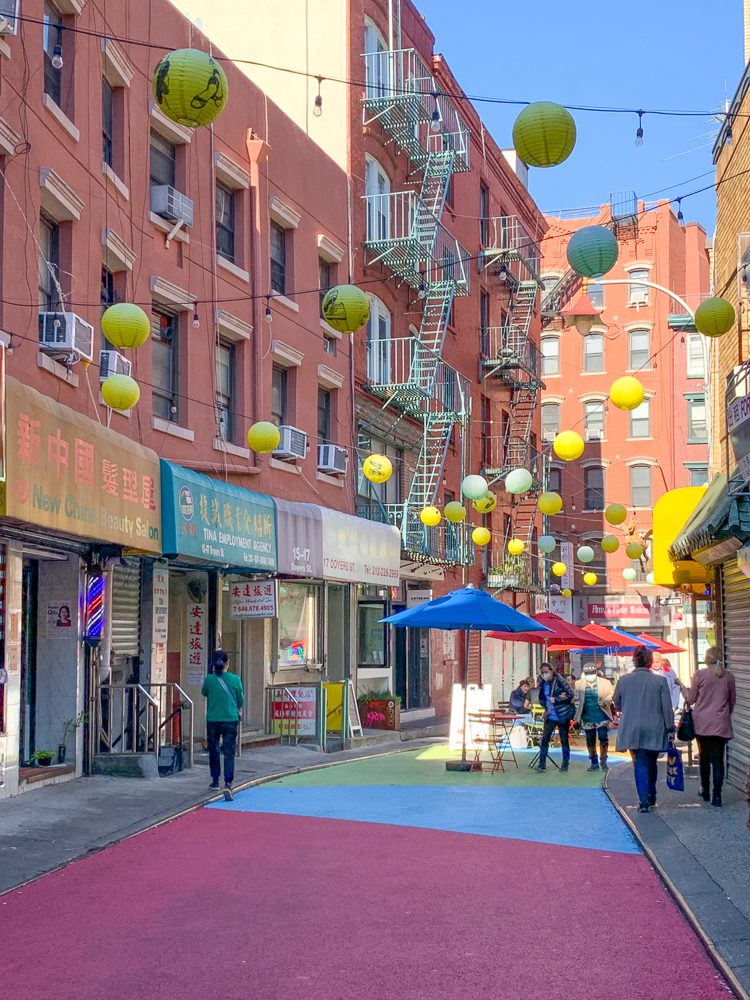
This uncharacteristically curved street in New York City has a notorious place in history. At the start of the 20th century, Doyers Street was the scene of many fights between rival Chinese gangs vying for territory and ultimately earning it the nickname, Bloody Angle.
Today, though, the street is painted in bright colors and outdoor tables are clustered outside the street’s restaurants which include Nom Wah Tea Parlor and Tasty Hand Pulled Noodles.
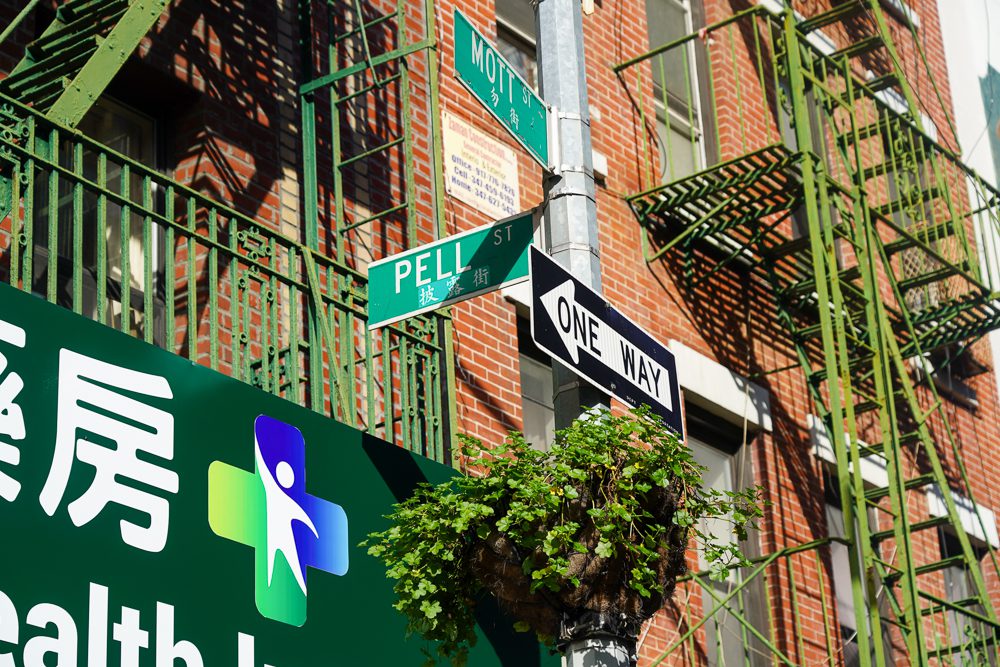
13. Pell Street
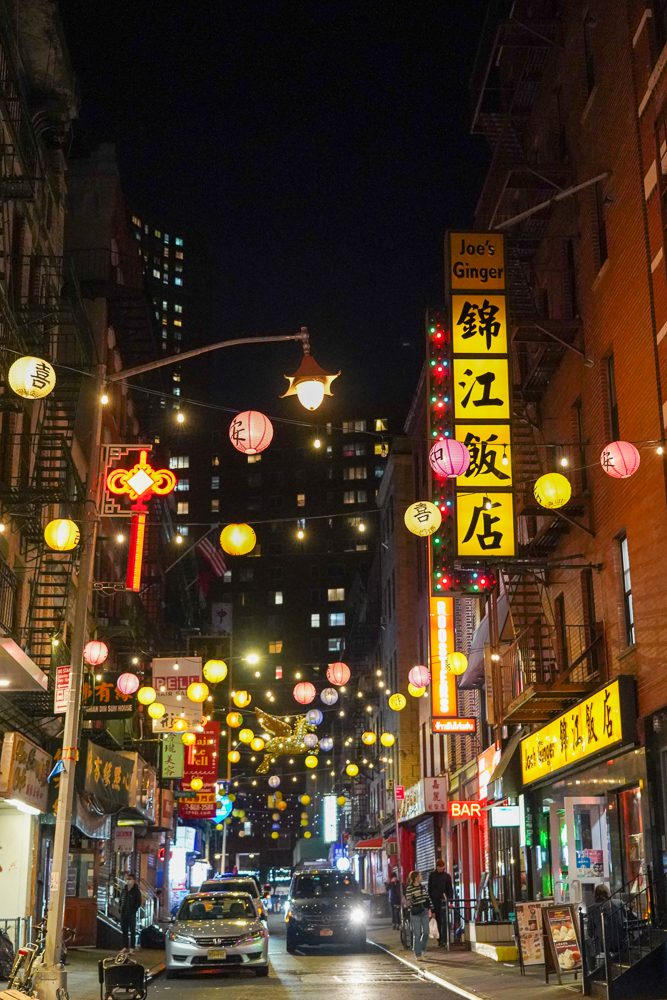
When you turn onto Pell Street from Mott, you just might think you’ve left NYC.
The signs are written in Chinese characters. Your nose can’t miss the smell of ginger, soy sauce, and garlic. And at night, the lanterns light up the street.
With New York’s Chinatown being spread out over many streets and other nearby neighborhoods bumping up against its borders, Pell Street feels as if you’re thoroughly entrenched in the Chinatown experience.
I love standing on Mott Street while looking down Pell Street to take photos. It’s one of the most iconic Chinatown and New York City photo spots.
ProTip: If you walk to where Pell Street meets the Bowery, you’ll see the Edward Mooney House. The house, built in the late 1780s, is now a New York City landmark as the oldest brick townhouse in Manhattan.
Heads up, though! It’s recently been covered with scaffolding as work to repair and restore the house is ongoing.
14. Kimberly Spa
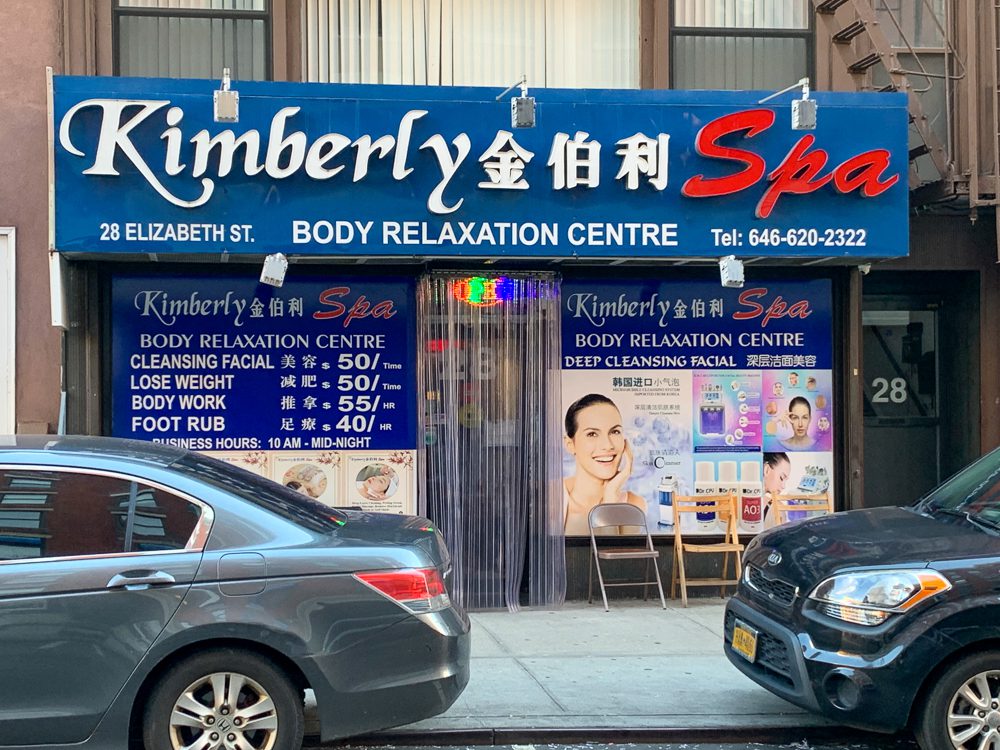
If your feet and body are sore from too much walking and NYC sightseeing, a massage in Chinatown is just the thing to soothe sore muscles without your wallet taking a beating.
Kimberly Spa is located just off Canal Street on Elizabeth Street. The word “spa” is a bit of a misnomer as the interior is basic with foot bath chairs and massage rooms divided by curtains. But, it’s the perfect spot for a break from the busy city.
I recommend a foot or body massage. Both will ease some tension and give your stomach some time to recover before tasting more of Chinatown’s delicious bites.
15. Canal Street Market
Located at 265 Canal St. near Lafayette Street, Canal Street Market is a food hall and retail space that fuses Lower Manhattan and Chinese culture with its carefully chosen vendors.
The space isn’t very big so it won’t take long to walk and browse through the market. Along the way, be sure to taste some wontons at Joe’s Noodles & Rice!
16. Joe’s Shanghai
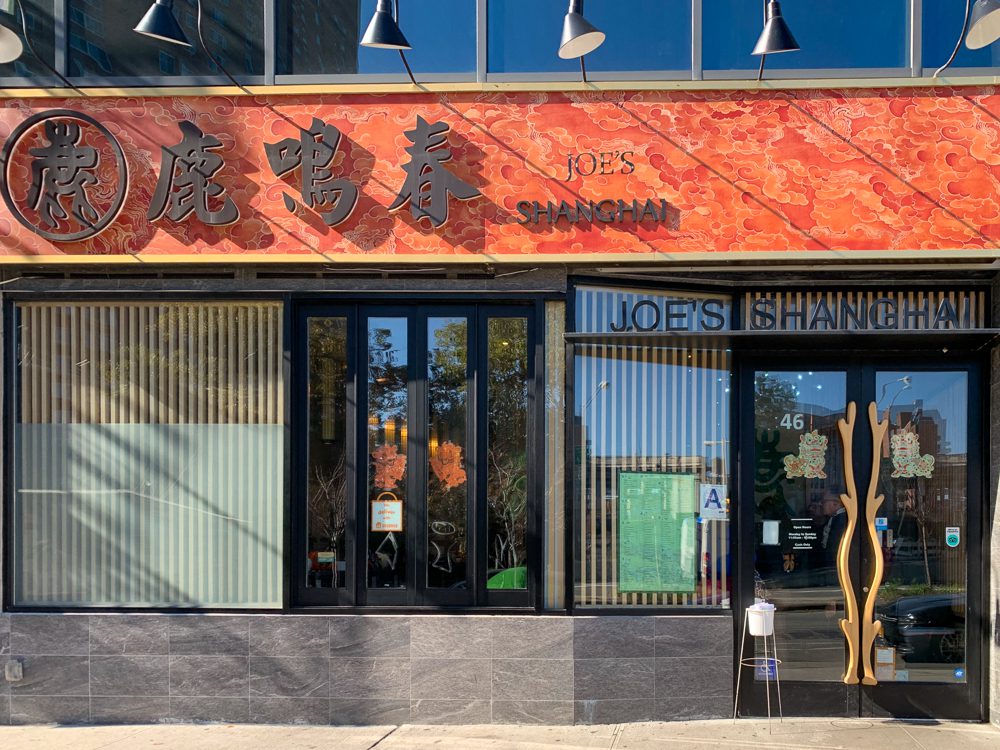
Joe’s Shanghai is a popular spot in Chinatown famous for its soup dumplings, a dim sum essential. You’ll see hot servings of them on every table, so if you go, be sure to get yourself an order, too.
Soup dumplings are different than regular dumplings or buns even if they look similar from the outside. Inside, they’re filled with hot soup and usually pork.
The Chinatown location is on the Bowery, just next to Hotel 50 Bowery and across from the Manhattan Bridge entrance.
The restaurant is open until 11 p.m. which is late compared to other places in Chinatown and it’s not uncommon to find a line outside even well past a typical dinner hour.
Bring cash because cards aren’t welcome.
17. Kimlau Memorial Arch
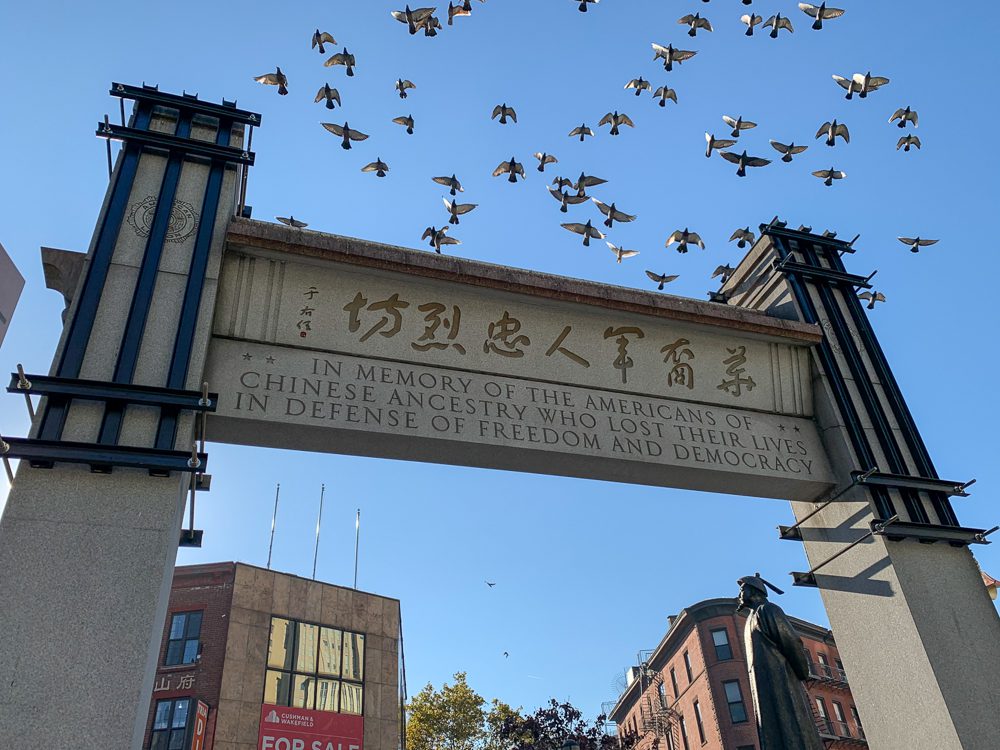
This monument is located in Chatham Square, just steps from where Mott and Doyers Streets end at the Bowery.
The arch is in honor of Chinese-American military veterans who died fighting in World War II. The monument gets its name from Second Lieutenant Benjamin Ralph Kimlau, an American fighter pilot who died during an attack against the Japanese close to New Guinea.
While a monument like this often isn’t the top reason you’d visit Chinatown, it’s good to understand its significance as you walk through the neighborhood.
18. Tasty Hand-Pulled Noodles
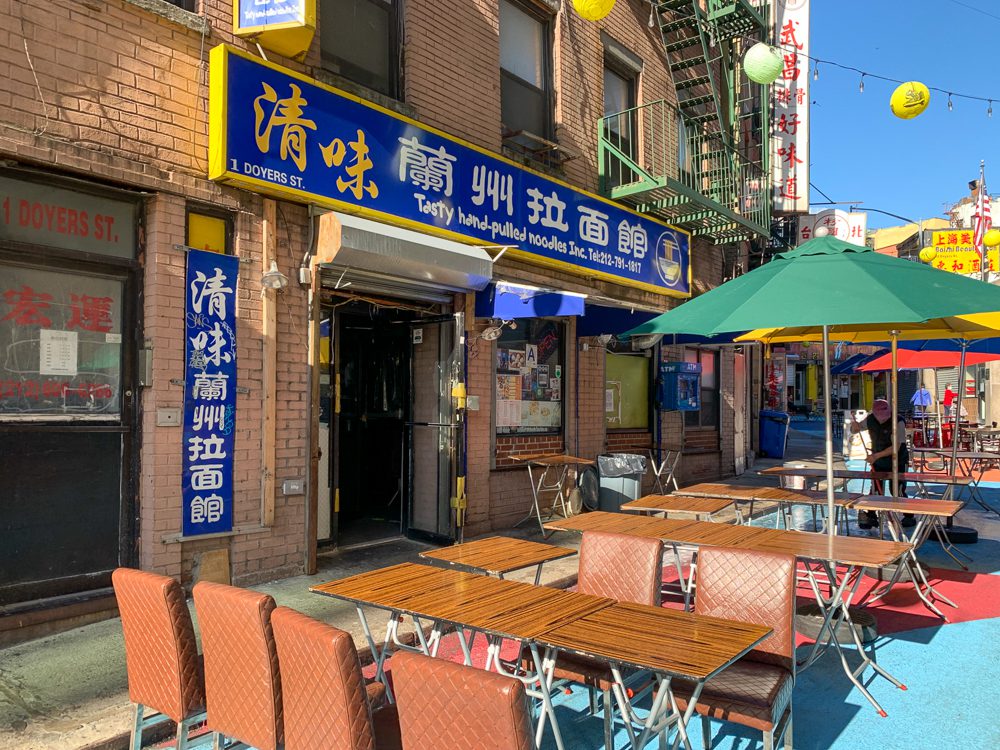
On Doyer’s Street just a few storefronts down from Nom Wah Tea Parlor, you’re likely to find a hive of activity around Tasty Hand-Pulled Noodles. There are tables set up outside the unassuming (cash-only) restaurant and a kitchen inside serving up delicious pan-fried noodles.
Pulled noodles are made from wheat-based dough. As the name implies, the dough is pulled and stretched to make long noodles. They are cooked right after for a super fresh taste!
Go for the knife-cut/knife-peeled noodles pan-fried with your choice of vegetables and protein. The portions are generous but if you’re particularly peckish, order some dumplings, too. They’re also so tasty!
19. Ting’s Gift Shop
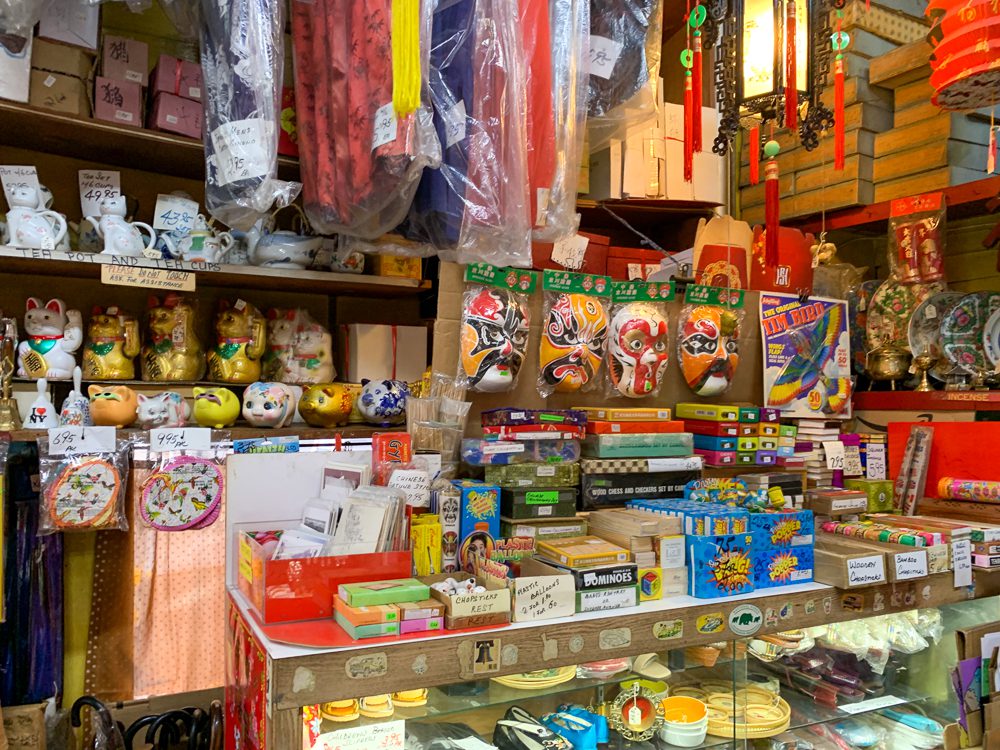
I couldn’t in good faith write a guide for Chinatown NYC and not include Ting’s Gift Shop! It’s a place I always stop by when I’m in the neighborhood.
Perhaps it’s the teacher in me, but the store always reminds me of the trinket shop in Chinatown featured in the children’s book, The Cricket in Times Square, by George Selden.
The tiny shop is on the corner of Pell and Doyers Streets, just steps from Nom Wah Tea Parlor and Tasty Hand Pulled Noodles. It’s the perfect spot to pick up a souvenir or two, from painted chopsticks to card games to a handy back scratcher. (Works great, by the way!)
20. Mmuseumm on Cortlandt Street
On the fringes of Chinatown, in a wedge of New York dedicated to courthouses and government offices, you’ll come across NYC’s smallest museum, Mmuseumm.
What you’ll find are curated, unusual objects from modern history meant to get you thinking. The entire museum is housed in something similar to a walk-in closet (also a rarity in NYC for the record).
Mmuseumm is located at 4 Cortlandt Alley and is open only during warmer months, usually spring to fall. The visit doesn’t take long given its size but it’ll likely end up being one of the quirkiest and most interesting places you’ll visit near Chinatown.
Where is Chinatown in NYC?
If you visualize the island of Manhattan as a long oval-ish shape, Chinatown would be towards the bottom-right of that oval. More properly, Chinatown is on the lower east portion of the island. This would be diagonally opposite to a neighborhood like the Upper West Side.
I’ve even put together a map for you to reference which is just below this section.
Chinatown shares boundaries with other popular neighborhoods like Little Italy, Soho, Tribeca, and the Lower East Side. It’s also not far from areas like Nolita (North of Little Italy) and the Financial District.
Something really unique about this part of New York City is that you can actually see the dividing line between neighborhoods. Like on Mulberry Street, you can look in one direction and see Little Italy and turn the other way to see Chinatown!
Map of Chinatown NYC
On the NYC Chinatown map above, you’ll find all the places mentioned in this guide of the best things to do in Chinatown New York City.
As you can see, many of them are clustered around the small area that is the heart of Chinatown. Given how close many of these places are, the neighborhood can be explored in as little as a few hours depending on how many times you stop to eat!
Best Hotel in Manhattan’s Chinatown
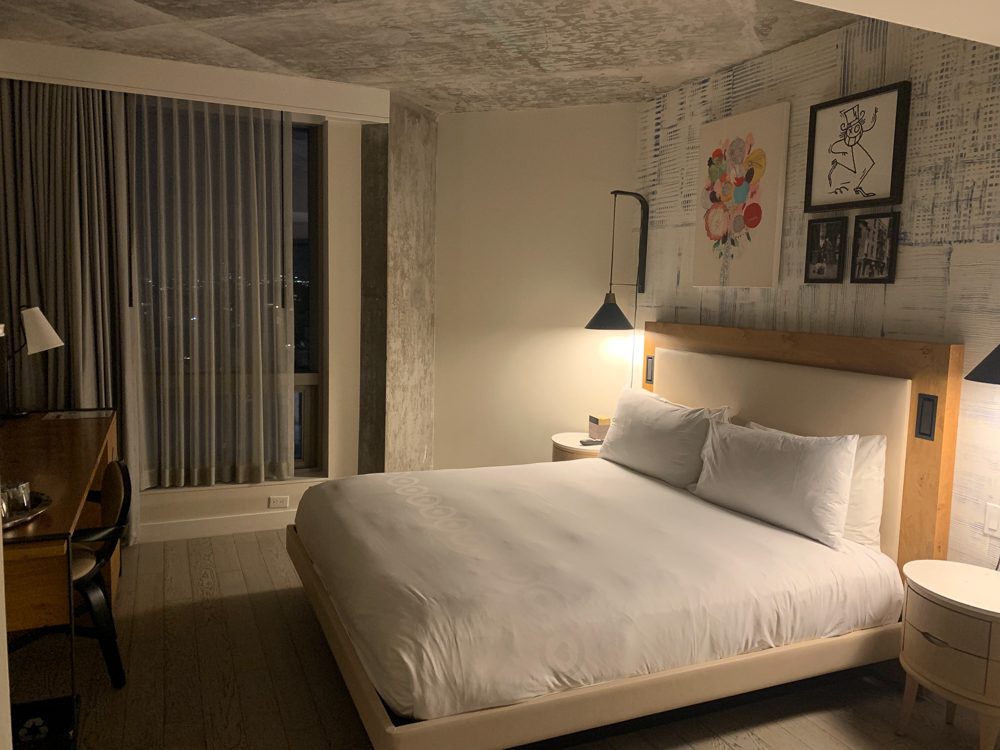
Hotel 50 Bowery is a Hyatt property located just off Canal Street and across from the entrance to the Manhattan Bridge. The views, especially from the upper floor rooms, are spectacular. Inside, the hotel has a boutique flair that encompasses the culture of the neighborhood.
Compared to some hotel rooms you might find in Manhattan, Hotel 50 Bowery’s rooms are roomy and have an upscale feel. Hotel guests can also access the Crown Rooftop Bar by using the hotel’s elevators to have a drink or just enjoy the gorgeous city skyline views.
Wondering about staying directly in Chinatown? It wouldn’t be my first choice as a first-timer in New York City. Neighborhoods like midtown and Chelsea are the typical areas to stay.
However, Chinatown and its subway stops make it easy to move around the city. From the neighborhood, you can also easily walk to other neighborhoods like Little Italy, Nolita, and Soho.
If you’ve been to NYC previously and feel comfortable navigating the subway, Chinatown can be a good way to experience a different neighborhood while still being well-connected to other areas throughout the city.
Directions to Chinatown NYC
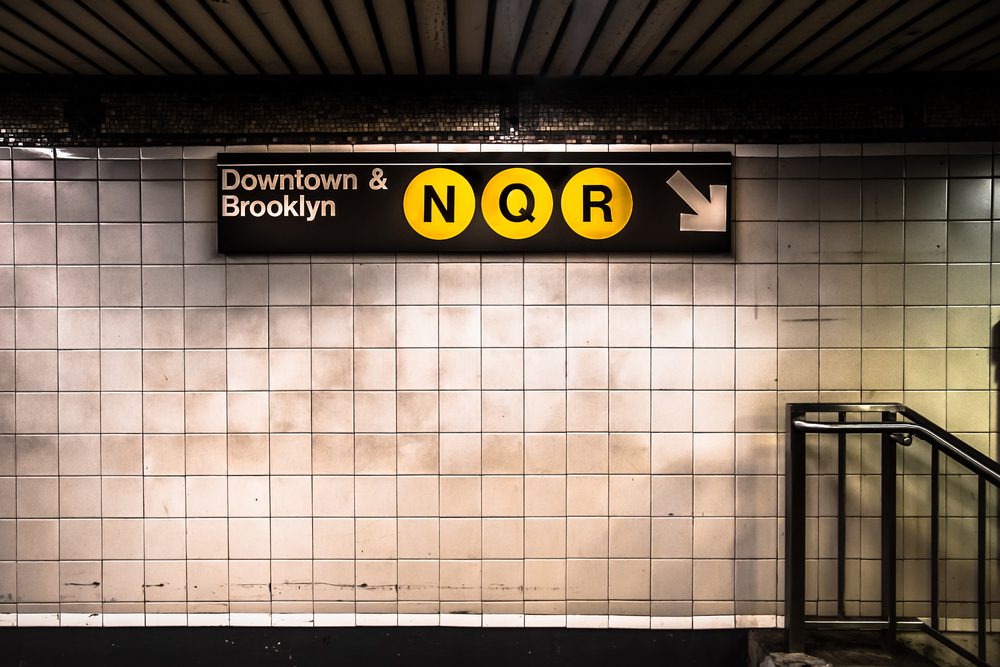
It’s really easy to take the subway to Chinatown. Many trains run through the area.
Canal Street is a main street that runs from east to west across Manhattan. It slices directly through Chinatown, which is on Manhattan’s lower east section.
The best option is to take the N, Q, R, W, J, Z, or 6 train to the Canal Street stop. This brings you directly into Chinatown.
If you look at a map of the NYC subway, the N, Q, R, and W trains are the yellow lines. These trains make several stops through midtown, the theater district, Herald Square, Greenwich Village, and Soho. In fact, if you’ve taken the R or W train to Prince Street in Soho already, it’s easy to walk into Chinatown from there, as well.
The 6 train is indicated in green on the subway map. It runs along Manhattan’s east side. So for example, if you were near Grand Central Terminal visiting The Summit at One Vanderbilt, the 6 train would be a great option to hop down to Chinatown.
The J and Z trains might be helpful if you’re coming from Brooklyn, sightseeing in the financial district, or finishing a visit to the Statue of Liberty. This is the line shown in brown on the NYC subway map.
Another option is to take the B or D line to Grand Street. On the map, this is the line in orange. The Grand Street stop leaves you just 1 block from the Bowery and 2 blocks from where Canal Street meets the entrance to the Manhattan Bridge.
If you’re already in Lower Manhattan, it might be just a short walk to Chinatown. Particularly, if you were visiting the Brooklyn Bridge or shopping in Soho, you can get to Chinatown on foot in no time.
Chinatown NYC FAQs
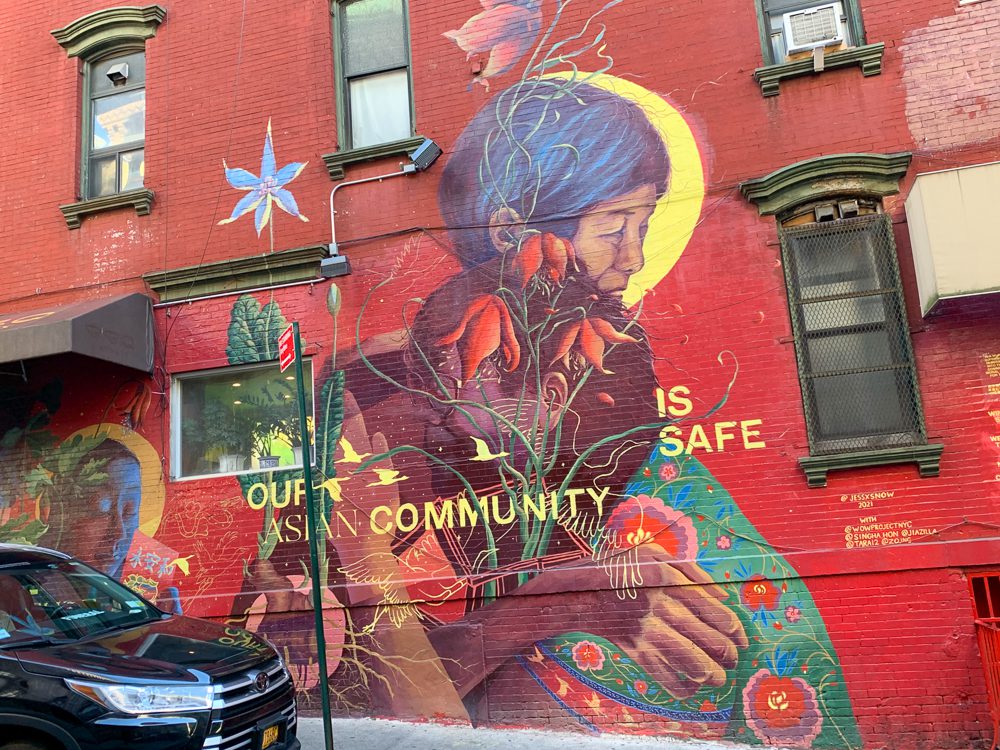
Chinatown NYC is safe to walk around.
During the day, the area is busy with residents, tourists, and traffic moving throughout the neighborhood. At night, Chinatown’s main streets, like Mott, Elizabeth, Pell, and Doyers have many restaurants open until 9 p.m. and some until 10 p.m.
Otherwise, Chinatown is quieter at night. Markets and shops are mostly closed with a few exceptions.
Absolutely, yes! Chinatown in Manhattan is a vibrant cultural neighborhood with interesting history and fantastic food!
You could easily walk through the neighborhood in just a couple of hours. However, if you plan to incorporate your own DIY foodie tour, stopping frequently to taste as you go, you’ll need more time. The same goes if you plan to get a massage or visit the Museum of Chinese in America.
While there are places that accept credit cards, many shops, markets, and restaurants are cash only. If there’s one NYC neighborhood where it’s good to have cash on hand, it’s Chinatown.
Canal Street is the main street where most people look for shops and street vendors. In reality, you can find places throughout Chinatown to shop.
Keep in mind, as tempting as buying a knockoff bag or wallet might be, it can be associated with criminal activity. Instead, support local shops like Ting’s, Wing on Wo & Co., Grand Tea & Imports, and KK Discount.
Ready to add Chinatown to your NYC itinerary?
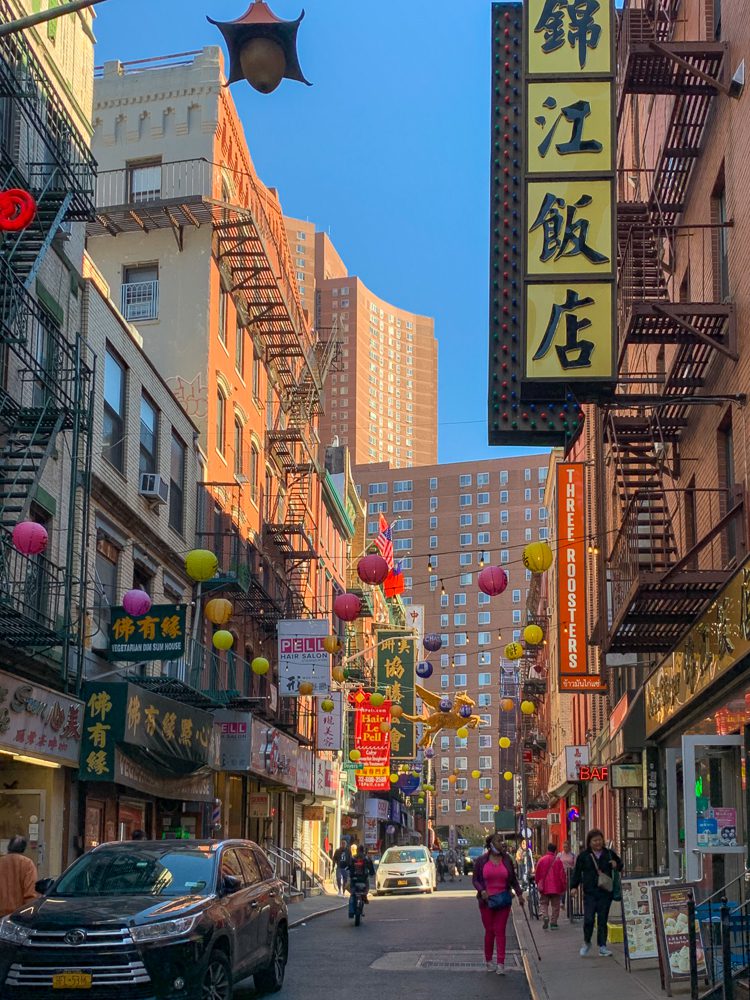
From the food in Chinatown to its cultural character and history, don’t miss the chance to add Chinatown as you put together your New York City itinerary!
You can explore the neighborhood in as little as a few hours but the experience of the visit is much more long-lasting.
I love how the essence of NYC flows from its distinct neighborhoods that are influenced by the people who live there. When you take the time to get to know a neighborhood like Chinatown, you begin to see what the real NYC is all about.
What are your questions about visiting Chinatown on your New York City trip?
Like this post? Please share it on social media using the share buttons below.