



Searching for the best deals on hotel bookings can feel like playing a game of Whack-a-mole. Nightly rates go up and down quickly, and if you don’t have the reflexes to act fast, the best hotel prices disappear…maybe for good.
I’ve traveled to 50+ countries (several more than once) and across all 48 continental states in the U.S. and I’ve learned that the best hotel booking tips aren’t gimmicky (i.e. needing to book on a specific day of the week or else all hope is lost).
Smart travelers use these tips to book hotels that I’m sharing in this guide to save money and get as much return value on their spending as possible.
Hotel Booking 101
There are 2 musts every traveler needs to do if they want to save money when booking hotels. These might seem like no-brainers but they’re non-negotiables so it’s best to talk about these first.
1. Join loyalty programs.
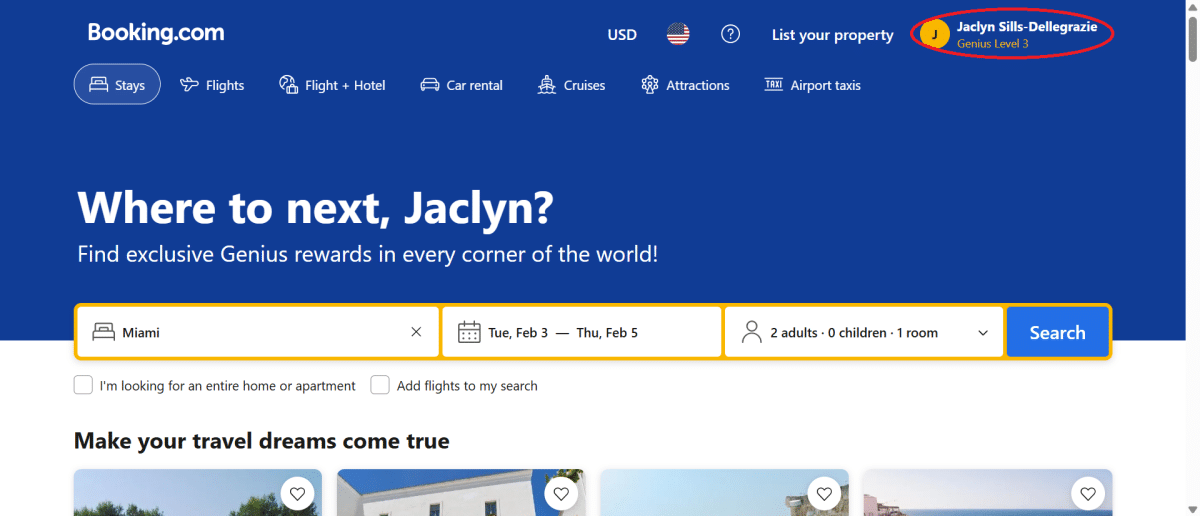
Become a member of hotel loyalty programs even if you only travel a couple of times per year. These include programs through hotel brands directly like Marriott Bonvoy or Hilton Honors, but also reward programs with online booking sites like Booking.com or Hotels.com.
Loyalty programs have members-only pricing and earn rewards that can be used for future stays. Members can also access perks like priority check-in, elevated status, free breakfast, and other benefits depending on the hotel or booking site.
Over time, stays earn points or rewards that can be banked to help you save money on future hotel nights.
The bottom line is these loyalty programs are free to join and come with instant savings in the form of member rates, even if you never concern yourself with points or future rewards.
If you’re serious about saving money on hotels and getting value back for your bookings, this is the fundamental first step.
2. Check prices on an Aggregator, an OTA, & booking direct.
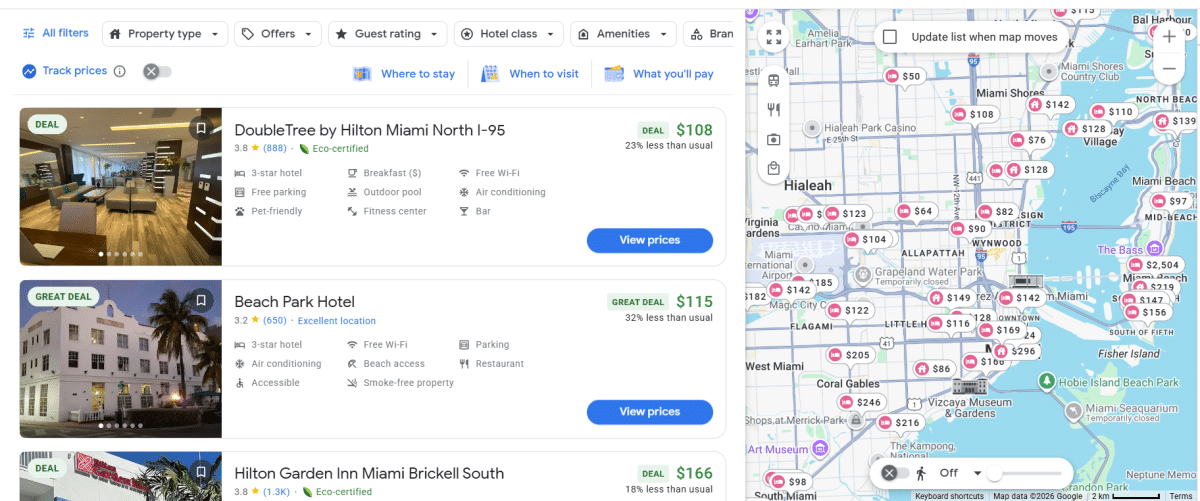
It’s fundamental at this point. If you’ve booked travel before, you know how important it is to check and compare prices for everything from flights to hotels, transportation to activities.
In the case of hotels, you should check with an aggregator like Google Hotels or Trivago. These sites pull in huge amounts of data to show the best deals all in one place. So you can see results on these aggregators from different booking sites, including the hotel directly.
If you find something you like and click to book, these sites send you to where they found the best deal. You don’t actually book the hotel through them.
OTAs (online travel agencies) are sites like Booking.com, Hotels.com, Expedia, Agoda. You can search and book hotels on these websites.
It’s important to compare prices with a couple of OTAs but you don’t need to check all of them one-by-one (that’s what aggregators are for). Plus, many of these sites are owned by a main parent company so comparing across the various sites isn’t as much of a comparison as you might think.
I typically choose from Booking, Priceline, or Hotels.com. If I’m traveling to Asia, I check Agoda. Remember to sign in to any loyalty programs. For example, on Booking, I unlock “Genius” discounts when I sign in.
Lastly, you should always check with the hotel itself. If there’s a loyalty program, check member-only rates.
When you compare your options, pay attention to more than just price, especially if the differences aren’t all that significant. Look at any perks that might come only by booking directly. Consider the cancellation policy. (More on this below.)
And remember, that if you do actively earn and redeem hotel points, third-party hotel bookings usually exclude you from taking advantage of any elevated status perks or earning points and nights for future stays and status.
These things may not directly impact the bottom line price for the stay but they could add great value to your stay.
Money-Saving Hotel Booking Tips
If you’ve booked even just a few trips, you know that hotels and accommodations eat up a big piece of the travel budget. Then, factor in the dynamic pricing of hotel pricing and it can feel like an impossible chase after a moving target.
3. Start your search with a range of dates.
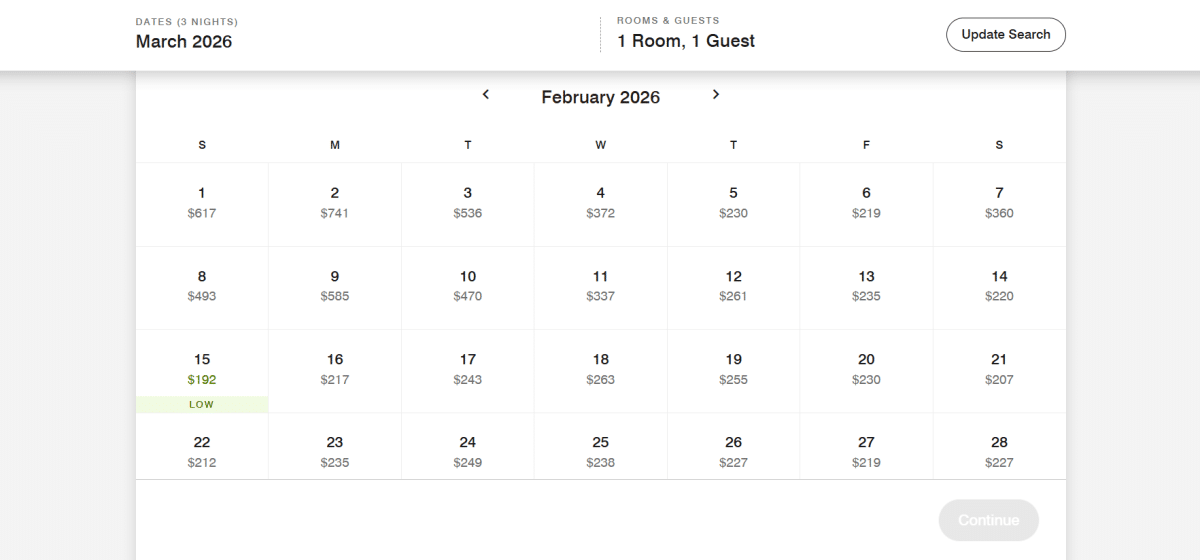
It’s no secret that flexibility when it comes to travel can save money. So, it’s in your best interest to be as flexible with your dates as possible, especially if you’re in the early stages of trip planning and just starting to check prices.
But even if you don’t have a ton of flexibility, try adjusting your dates by even 1-2 days to see if you land on a lower-priced date. Hotel nightly rates change daily. Just because a hotel is $300 one night doesn’t mean the price is the same on the next night.
To see what different nights cost, I use tools like Google Hotels calendar feature and Booking.com’s +/-7 flexible date search. Specific hotel programs like Marriott and IHG will also let you search with flexible dates.
ProTip: In some cases, it may make sense to switch hotels in the same destination to take advantage of better rates. For example, a hotel in a city center may cater to a lot of business travelers and have cheaper rates on the weekend. You leverage this by booking 2 hotels on their best-priced days and, in the process, get to save money and see what life is like in different parts of a destination.
4. Book a refundable rate (at least to start).
Once you’ve done some preliminary checks to get a sense of what hotels in your destination cost, book one that you like for the dates that work best and make sure it comes with a refundable rate.
I prefer the longest possible free cancellation period and specifically look for hotels that let me cancel my reservation as close to the check-in date as possible.
Now that you have the peace of mind of having a hotel, you can continually track prices for that hotel and others. If you see a better rate, you can book it and cancel the original reservation…even if it’s just a few days before your trip.
Use Google Hotels to set a “Track Prices” alert. They’ll email you if/when the prices drop.
ProTip: I also like to make reservations for a 2-3 hotels in my destination, all with a refundable rate/free cancellation. I track all of them and up my chances of a price drop later on.
5. Make hotel bookings for different destinations.

This approach is probably a bit different than how you might usually go about planning your trips. But, it has the potential to save money, especially when you can’t be all that flexible with your travel dates like with school vacations.
It essentially takes the refundable rate strategy from above and supercharges it.
Here’s how it works:
- Search well in-advance for hotels in 3 destinations you’d like to visit.
- Book a hotel in each place that has free cancellation.
- Track hotel prices to look for the best prices. Focus on what price seems like a great deal for a particular destination instead of comparing them to one another. (Hotels in London will likely always be more expensive than hotels in Mexico.)
- Try to pair it with the destination that also has the cheapest flight.
- Once you lock in the flight, cancel the hotels you don’t need and keep tracking the reservation in your chosen location.
I like this strategy because your options are wide open and you can react to the best deals even before you pick your destination.
And if you have set vacation dates because of work or school, you have the peace of mind that you’ve booked something and can fine tune everything based on pricing as the trip gets closer.
6. Track your hotel reservations.
In case I haven’t said it clearly enough above, I wanted to call it out with its own point.
Hotel pricing is like the stock market. Nightly rates go up and down constantly throughout the day depending on things like demand but also local weather and flight delays.
This is why making a reservation with free cancellation nearly up until check in time is so important. You want to be able to book at a better price if it comes along.
To get the best hotel deal, be prepared to book, re-book, cancel, re-book a few times up to 48 hours before checking in to get the best price on your hotel stay.
7. Take into account the best times to book your hotel.

This isn’t science but it’s based on trends supported by data collected by sources like Hopper, Skyscanner, Kayak, Expedia, and the U.S. Travel Association.
There’s absolutely no harm in making a hotel reservation well in-advance as long as it’s fully refundable, especially if it gives you peace of mind to know you have somewhere to stay.
But with hotel prices constantly changing, here’s a quick look at when you might find the windows of time with the best deals on hotel rates.
| Domestic (U.S.) Trips | 15-30 days before check in |
| International Trips | 3+ months out; then 18-29 days before check in |
| Resorts & Holidays | 3-6 months in advance (Be ahead of things like school holidays, Christmas in NYC, etc.) |
| Major Global Events (World Cup, Olympics) | 12 months out, track prices but don’t hold out for last-minute price drops. |
8. Check if the price of “free breakfast” is worth it.

Who doesn’t love to see “Free Breakfast” as part of what’s included in a hotel rate? It instantly makes you feel like you’re getting something extra, aside from the convenience of it.
But those “free” eggs might not be all they’re cracked up to be. Heck, there might not even be any eggs at all!
First, compare the hotel rate with and without breakfast included. You might be shocked to see a $20-$30+ markup per person.
Once you have an idea of any additional cost for breakfast, read reviews about the hotel specifically looking for any mention of the breakfast.
Is it a continental breakfast? Do people mention a delicious full hot breakfast with eggs and pancakes? Instead, was that full breakfast cold and not worth it? Or are there comments that it’s “just” croissants, fruit, and cheese?
I’m not making any judgement on which breakfast is better. But you should understand what that added cost will likely get you. Then, you can decide if it’s worth it.
For example, in Europe, that hotel breakfast with pastries and fruit may add an additional 35 Euros to the nightly rate. Meanwhile, there are cafes just outside that’ll serve you essentially the same thing for a fraction of that price.
9. Look for new hotels in your destination.

New hotels tend to offer an opening or introductory rate until they can accumulate some reviews, guest feedback, and work out any glitches. If your timing is right, you could save big before prices rise.
For example, years ago, I booked a last-minute stay at a new hotel in Paris. It was a beautiful, small, boutique hotel in a great location in the 6th arrondissement. I booked that hotel for less than $200 a night.
Fast forward a few years and I hoped to stay again at that hotel. I found out they had gotten quite popular and rates were now $700 a night! Needless to say, I looked elsewhere.
A simple Google search or quick chat with your favorite AI chatbot and you can see if there are new or new-ish hotels opening around the time of your trip.
While writing this I did just that…again for Paris. I found this link which showed hotels that were opening soon. Then, I went to the website of one of them and discovered a calendar full of introductory rates…even well into the summer when prices in a European capital city skyrocket.
10. Contact the hotel directly.
For hotels based in the U.S. or your home country, it’s easiest to call without worrying about language barriers. Otherwise, send an email to the hotel to see what they say.
If you’ve used these hotel booking tips to make a hotel reservation with free cancellation through a third-party website like Booking.com, tell the hotel about the rate you found online and ask nicely if they can match or beat it.
Hotels prefer when you book directly because they don’t have to pay a fee to the online booking site. So even if they can only match the rate, you might end up with other perks like an upgraded room, waived resort fees, or free parking.
The worst they can say is no and you won’t have spent more than just a few minutes.
ProTip: When you reach out, ask the hotel if they offer any discounts for seniors, students, teachers, military, or AAA or AARP members. You might unlock a special rate that wasn’t available online. Just be mindful of the cancellation policy before you agree to a new rate.
11. Take a chance on a Priceline Express Deal
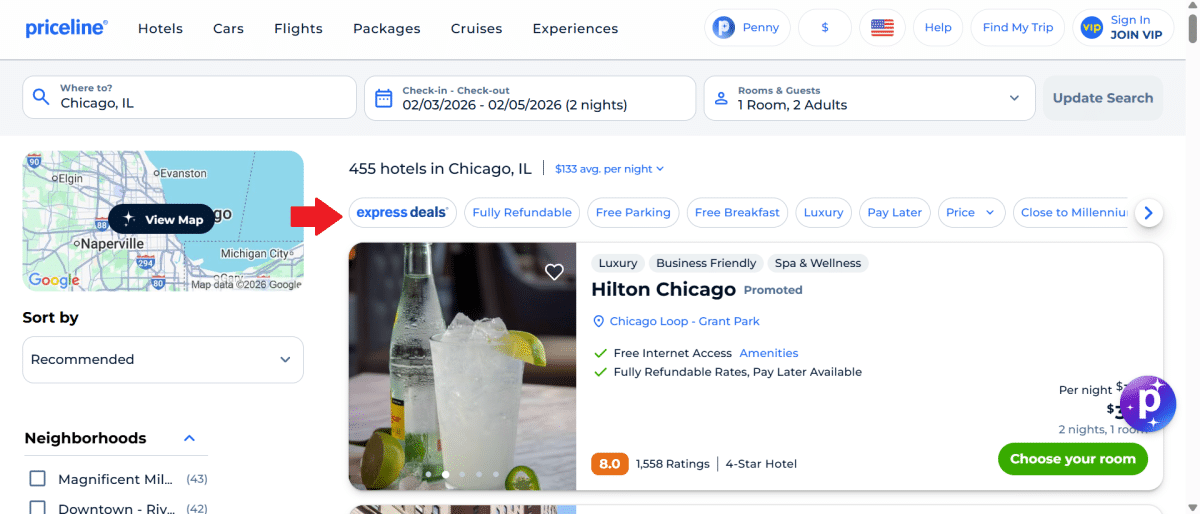
When you search for hotels on Priceline, the results will populate with filters above them. One of them says “express deals.” Click it and you’ll see the results for these hotel deals.
The catch is you don’t know the name of the hotel until after you’ve booked. Instead, you choose based on star rating (3-star, 4-star hotel) and can see some examples of what brands might be included in this category. (You may be able to use the filters on Google Hotels to figure out or at least narrow down the likely property.)
Before going this route, you should absolutely compare pricing. Not everything might be as big of a discount as it seems.
Also, it’s important to know that these deals are non-refundable. So, in my experience, I’ve gambled on hotel stays that were somewhat last-minute rather than lock myself into a “deal” too far in advance.
ProTip: Another tool to know about specifically for last-minute day-of bookings is HotelTonight. Through their app, it’s possible to find discounted hotel rates. But, you should always do a quick price comparison with the hotel itself and an aggregator, as well as read any fine print so you’re not surprised with additional fees when you arrive at the hotel.
12. Use a cashback or points-earning portal.
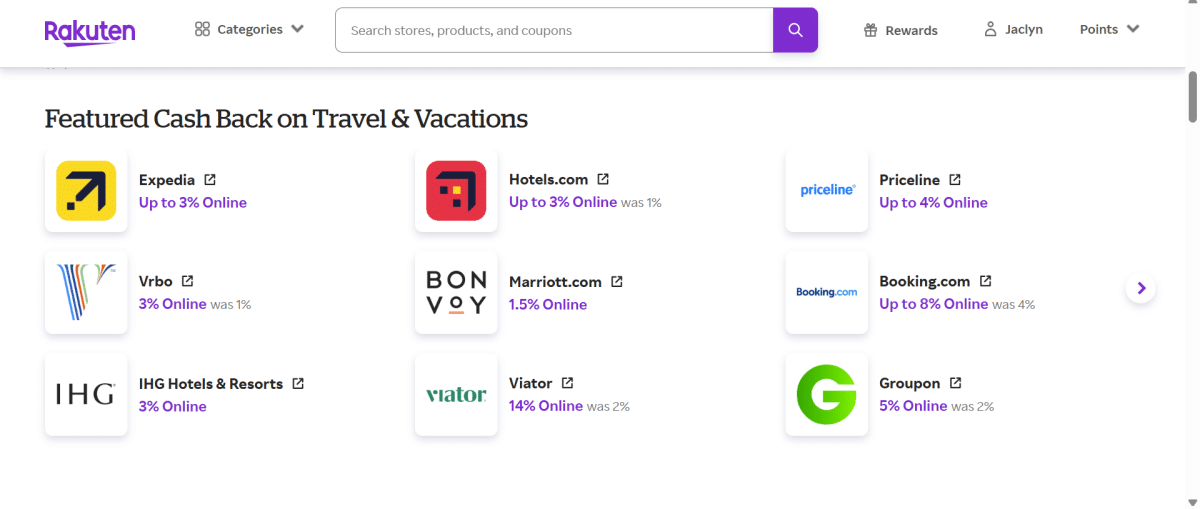
This doesn’t have a savings impact on the total cost of your hotel bill. But these portals can earn cashback rewards or points that can be used for other purchases or future hotel stays.
I generally use Rakuten because I earn American Express Membership Rewards points through that portal. But it can also be used to earn cashback. You can easily check portals with the best earn rate and/or type of currency (points, miles, cashback) at Cashback Monitor.
If you haven’t used a portal like this before. It’s simple and just requires a few extra clicks. After you’ve signed up for the portal (it’s free), you simply go to the portal and search for the hotel brand or travel booking site you want to book with. Click on the brand and the “shop now” button to be redirected to that website. Then, book your hotel like normal.
ProTip: If you’re already connected to airline loyalty programs or banks like Chase or Capital One, you already can access their portals.
For example, if you want to book a Marriott hotel, you can go to a portal like Rakuten. Click on Marriott and the portal will send you to Marriott to book your stay.
What’s different is that you’re earning the stated earn-rate listed on the portal, for example 2% or 5%. This cashback (or points) is in addition to any points you’d earn by staying at Marriott and anything you’d earn by (possibly) paying with a travel rewards credit card.
13. Be strategic by buying hotel points.
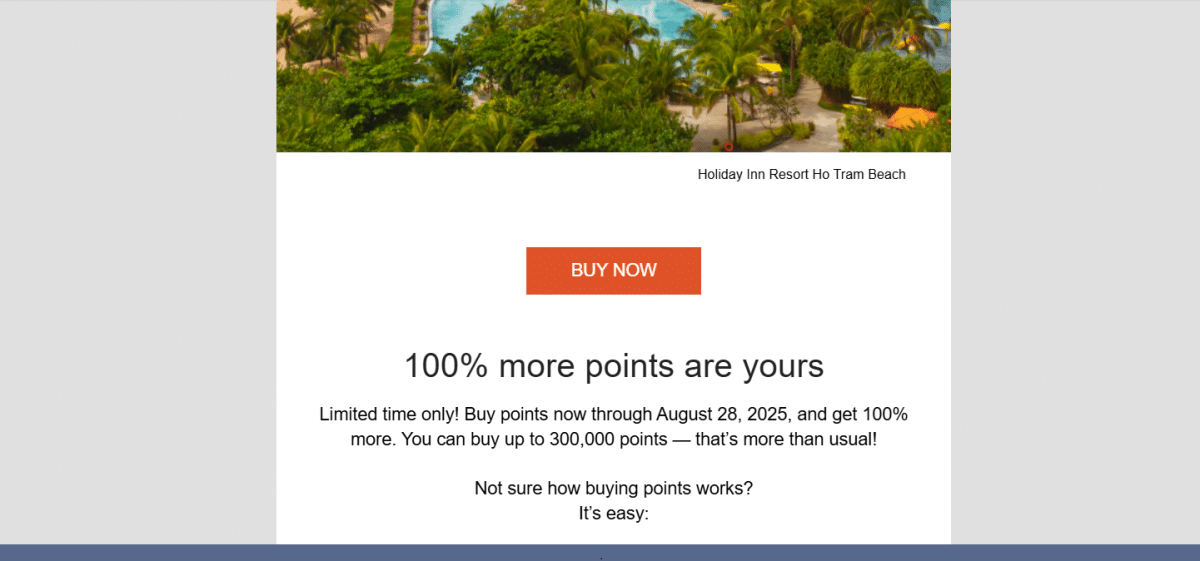
This specifically applies to hotel brands like IHG, Marriott, Hilton, etc that have loyalty programs. It’s also an advanced strategy so think this one through to make sure it makes sense.
Generally speaking, you should NOT buy hotel points if you don’t have some stays in mind where you can use the points. It’s also better to buy hotel points when there’s a bonus and you’ve done the math to confirm the return value.
A good example of this is with IHG. These include hotels like Holiday Inn Express, Crowne Plaza, Intercontinental, Kimpton, and others.
A few times a year, IHG sells their points with a 100% bonus. So if you buy 25,000 points during one of these sales, you’d end up with 50,000 points.
Without going too deep into this strategy since it’s worth its own guide, it might just work out that those 50,000 IHG points helped you stay at an IHG hotel for 3 nights and the cash out-of-pocket for those points was less than what you would have paid for the hotel had you booked it normally.
ProTip: In the scenario above, if you have the IHG Premier credit card, you can get the 4th night free on consecutive award stays of 4 nights or more. This would add even more value to the points purchase and overall award redemption.
14. Check in on a Sunday or Monday.
The day you check in to your hotel matters much more than the day you book your hotel reservation, especially because you’ll be tracking and likely re-booking reservations as you (hopefully) find better prices.
Not surprisingly, Friday’s are usually the most expensive days of the week to check in. If you want to save money, re-think that long weekend or adjust your travel days to avoid the day when everyone wants to arrive.
Checking in on a Sunday or Monday can potentially save 10-20% depending on your destination and seasonality compared to Fridays.
15. Keep an eye out for promo codes & sales.
This is really easy to do when you’re already a member of hotel loyalty programs. You’ll usually get emails letting you know about seasonal sales, member-only sales, promo codes, and destinations or specific hotels running sales.
Sometimes, larger hotel brands like Marriott or Hilton will offer a special price if you book in the app versus the website.
You can even look at sites like Groupon or Travelzoo to look for special discounts on hotels. Or if you have a travel rewards credit card, check for partner offers.
Chase and American Express both have offers you can add to your cards that will trigger when you make a purchase at that merchant. These offers regularly feature hotel brands.
16. Choose the right hotel location.

Particularly for city destinations, staying right in the center is likely to cost the most. But staying too far outside the city center could end up costing more than you imagined on transportation to get where you want to be.
Use a tool like Google Maps to identify the ideal area you’d like to stay. Then, look for hotels just outside this zone, preferably within easy walking distance to the center or next to a subway or metro.
I like to look at the places I want to visit and check how to get there from a possible hotel.
For example, in Rome, how far of a walk is it from the hotel to the Colosseum or Pantheon? Is the hotel near a metro station?
Ideally, you’d find a hotel that is in a sweet spot for both price and convenient location.
17. Don’t book more of a room than you need.

Sometimes, it’s nice to splurge or you’re celebrating a milestone wedding anniversary and you really want to stay in a suite or deluxe room.
But in other cases, think carefully about choosing a higher-priced room before you book. It’s the same principle when you want to save money on car rentals. Don’t pay for more car than you actually need.
Compare room types, especially if you’re trying to decide between a standard room and a deluxe room. Usually these rooms have the same bed types and bathrooms and what you’re really paying for is a bit more square feet.
If you’re planning a Caribbean hotel stay on the beach, it’s probably worth considering a room with a view or even better a balcony with a view. But, if you’re in a city sightseeing all day, is it really worth paying more for a balcony that you probably will barely use?
18. Watch for hidden fees.
Always read the fine print to know if there are any property fees, pet fees, or city taxes you’ll need to pay directly to the hotel when you arrive.
If you’re driving to the hotel, does your stay include free parking or is there a nightly charge? It might actually be better to pay a few more dollars each night for a hotel room with free parking instead of staying somewhere with a better nightly rate but charging $40 a night for parking.
Don’t assume you can add a person to your reservation for free. Some hotels will charge a fee per night to have a cot or rolling bed for another person to sleep.
The bottom line is that it’s not always possible to avoid extra fees during your hotel stay but knowing beforehand helps you choose the hotel with the best complete package versus just the best nightly rate.
You can get the best deals on hotels with the right strategies!
The reality is that hotel prices change all the time. We can’t stop that. But we can stop paying too much by being just as quick-moving and crafty.
Use even a few of these booking hotel tips for your next hotel stay and you’re all but guaranteed to come out ahead.
What are your questions about booking hotels for the best prices?
Like this post? Please share it on social media using the share buttons.
